Understanding Gradual Water Supply Resumption After Maintenance
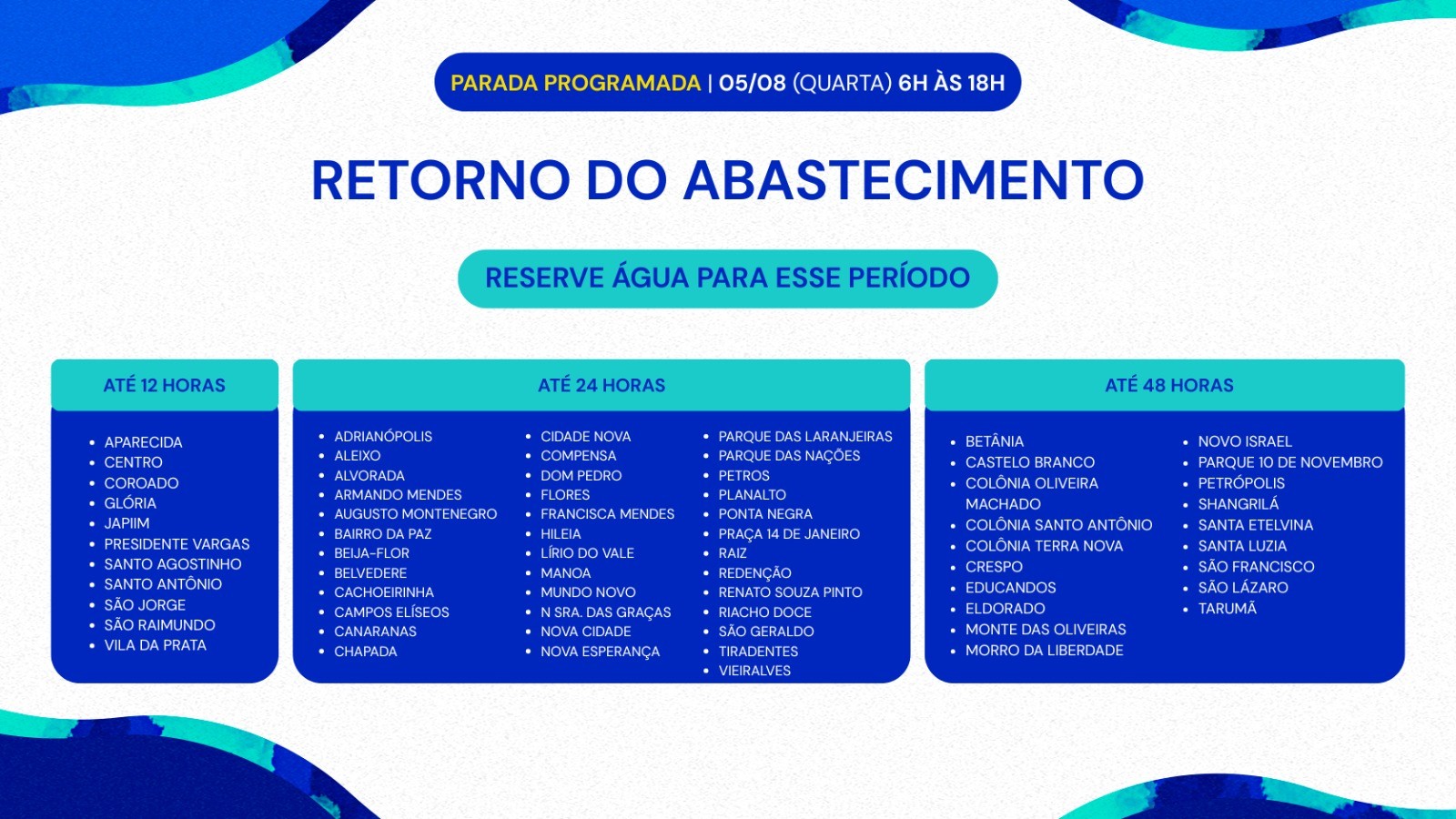
Águas de Manaus is conducting scheduled maintenance at the Ponta do Ismael water treatment facility on Wednesday, June 5th. This temporary interruption is necessary for safe execution of the services. The resumption of water supply after such interventions is not instantaneous, especially in Manaus, a city with a complex geography spanning over 11,400 km² and an extensive water system of more than 4,000 km of pipes and aqueducts. Following the reconnection of treatment plants, water gradually flows through this infrastructure, moving from reservoirs to properties. The process prioritizes areas closer to the treatment plants and at lower altitudes, before reaching more distant and elevated neighborhoods. As water moves through the network, pressure is restored gradually until the entire system is balanced. Jéssica Candeia, Operations Manager at Águas de Manaus, explained that controlled pressure recovery is crucial to prevent ruptures and leaks, which could further delay normalization. These preventive maintenances are part of the concessionaire's annual plan to modernize equipment and prepare the system for the Amazonian Summer, a period of high water consumption. The Ponta do Ismael facility maintenance will run from 6 AM to 6 PM on June 5th, after which treatment plants will be reconnected. Water supply normalization is expected within 12 hours for central and nearby areas, and up to 48 hours for higher and more distant regions, with full recovery anticipated by Friday, June 7th. The entire process is monitored in real-time by Águas de Manaus's Integrated Operations Center, which also directs water trucks to critical facilities if needed.
Scheduled maintenance of critical infrastructure like water systems is essential for long-term reliability and preventing emergencies. The phased approach to restoring supply, prioritizing proximity and altitude, reflects a logical engineering strategy to manage pressure and avoid system damage. However, the extended normalization period, up to 48 hours for some areas, highlights the inherent challenges of maintaining service continuity in geographically complex urban environments with aging infrastructure. This event underscores the ongoing tension between necessary system upkeep and immediate public service demands, particularly in regions with high consumption periods like the Amazonian Summer. Future planning may need to explore more resilient system designs or advanced pressure management technologies to minimize disruption duration.
AI-generated to prompt reflection — not editorial opinion, not advice, not a statement of fact. How this works.
