Understanding the Differences: Junction, Terminal, and Cantt in Indian Railways
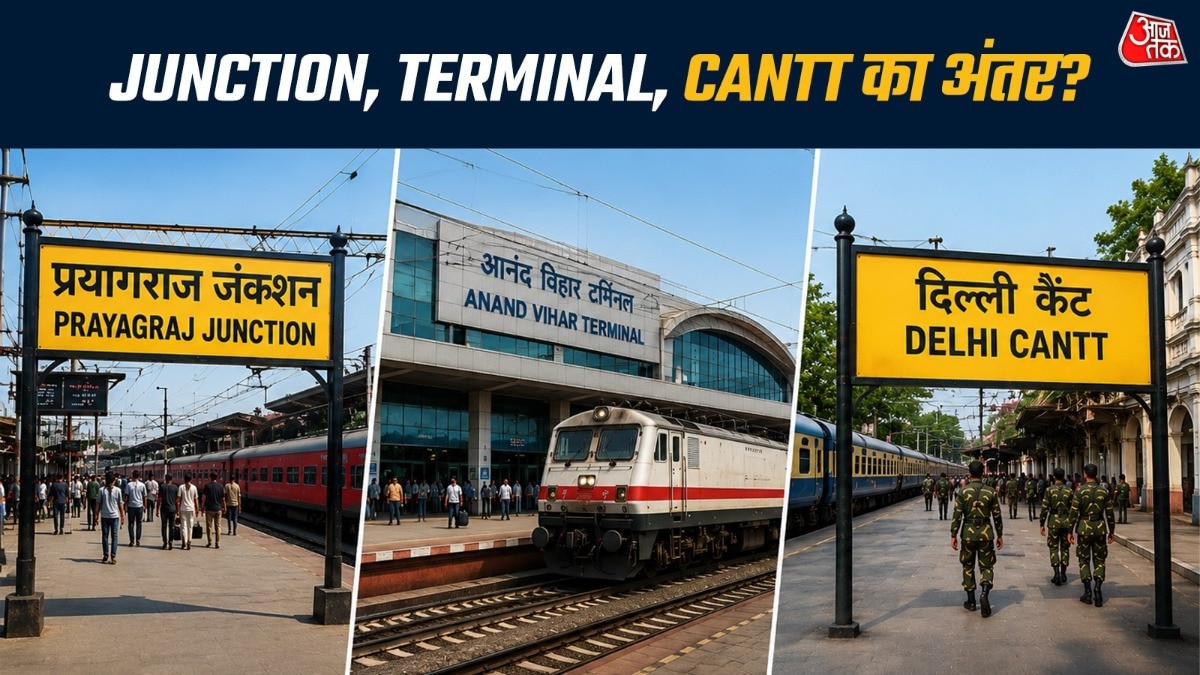
Indian Railways uses specific terms like Junction, Terminal, and Cantt to denote different types of railway stations, and their presence in a station's name signifies distinct operational characteristics. A Junction station is a point where two or more railway lines converge or diverge, allowing trains to switch tracks and proceed to different destinations. These stations are crucial for route flexibility and connectivity within the rail network. A Terminal station, also known as a terminus or central station, is typically the final destination for many long-distance trains. Trains arriving at a terminal station usually originate or terminate there, meaning they do not pass through to another destination. These stations often have extensive platforms and facilities to handle the high volume of trains that start or end their journeys. The term 'Cantt' or 'Cantonment' indicates that a railway station is located within or near a military cantonment area. Historically, these stations were established to serve the transportation needs of the armed forces and are often managed with considerations for military logistics and personnel movement. While not every large station is a junction, the classification helps passengers understand the station's role in the broader railway network and its connectivity options.
The nomenclature of Indian railway stations as Junction, Terminal, or Cantt reflects a functional classification system designed to manage the complex logistics of a vast rail network. Junctions facilitate route diversification and network efficiency, while Terminals serve as primary hubs for train origination and termination, impacting passenger flow and scheduling. The inclusion of 'Cantt' highlights the historical integration of military needs with civilian infrastructure, underscoring the evolving role of transportation in national development. Understanding these distinctions is key to appreciating the operational architecture of Indian Railways and its capacity to serve diverse user groups, from daily commuters to strategic military movements.
AI-generated to prompt reflection — not editorial opinion, not advice, not a statement of fact. How this works.