Unexploded Ordnance Poses Deadly Threat in Gaza, Injuring Hundreds
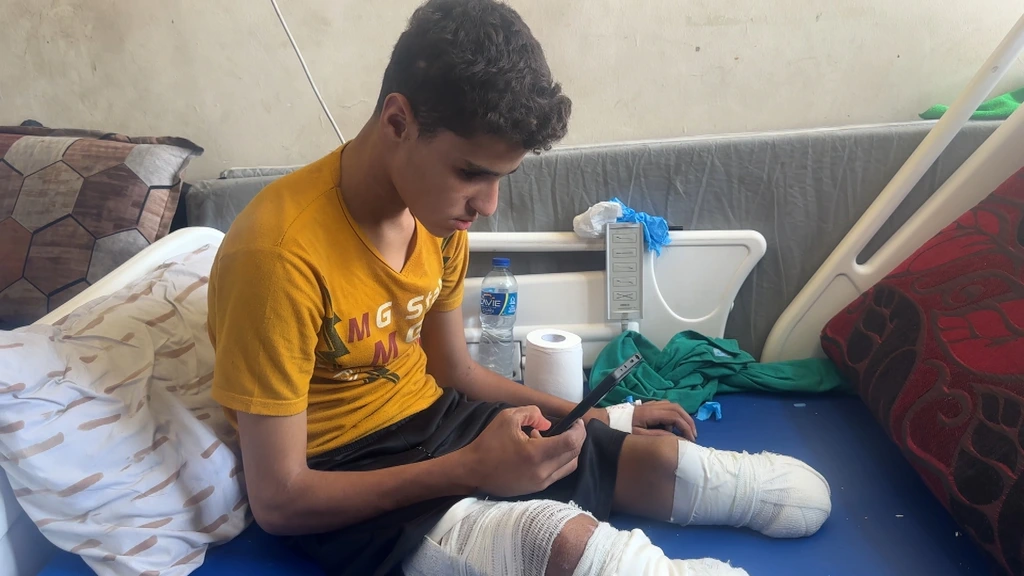
Beyond Israeli bombardments and infectious diseases, Gaza faces a significant, less visible threat from unexploded ordnance (UXO). Hundreds of people have been killed or injured by these remnants of past conflicts scattered throughout the territory. According to the UN Mine Action Service (UNMAS), at least 1200 individuals have been casualties of UXO since the current Gaza war began, with nearly half of them being children. One such victim, 16-year-old Mohammed Surour, lost both legs, sight in one eye, and suffered partial paralysis after an explosive detonated near him. His injury has profoundly impacted his family, who now struggle with basic necessities like water collection, a task he previously managed. The International Red Cross is conducting awareness sessions for Gaza's inhabitants, particularly teenagers, who are considered a vulnerable group due to boredom, curiosity, and unrestricted movement in potentially unsafe areas. UNMAS has identified over a thousand dangerous items, averaging one explosive per 600 square meters, though the exact total number of UXO remains unknown. The organization anticipates increased danger during the reconstruction phase, as debris removal could disturb buried explosives. The International Red Cross highlights that clearing UXO is the ideal solution, but acquiring necessary equipment is severely hampered by Israeli restrictions on what can enter Gaza, forcing a focus on risk mitigation through education. Meanwhile, 16-year-old Mohammed Surour awaits Israeli approval to travel abroad for specialized medical treatment, including plastic surgery and prosthetics, to address his wounds which are not healing properly due to a lack of essential nutrients within Gaza.
The presence of unexploded ordnance in Gaza presents a critical, long-term humanitarian challenge that extends beyond immediate conflict dynamics. This issue highlights systemic governance failures in ensuring civilian safety during and after hostilities, particularly concerning the import of essential demining equipment. The reliance on awareness campaigns, while necessary, underscores the limitations imposed by access restrictions and the complex geopolitical landscape. Looking ahead, the long-term implications of widespread UXO contamination will significantly impact Gaza's reconstruction efforts and economic recovery, potentially creating enduring hazards for generations. Addressing this requires sustained international cooperation and a commitment to facilitating the safe removal of these dangerous remnants, recognizing it as a prerequisite for sustainable development and human security in the region.
AI-generated to prompt reflection — not editorial opinion, not advice, not a statement of fact. How this works.