Unique 'Sea Without a Sea' Sand Dune Landscape Stuns in Goiás, Brazil
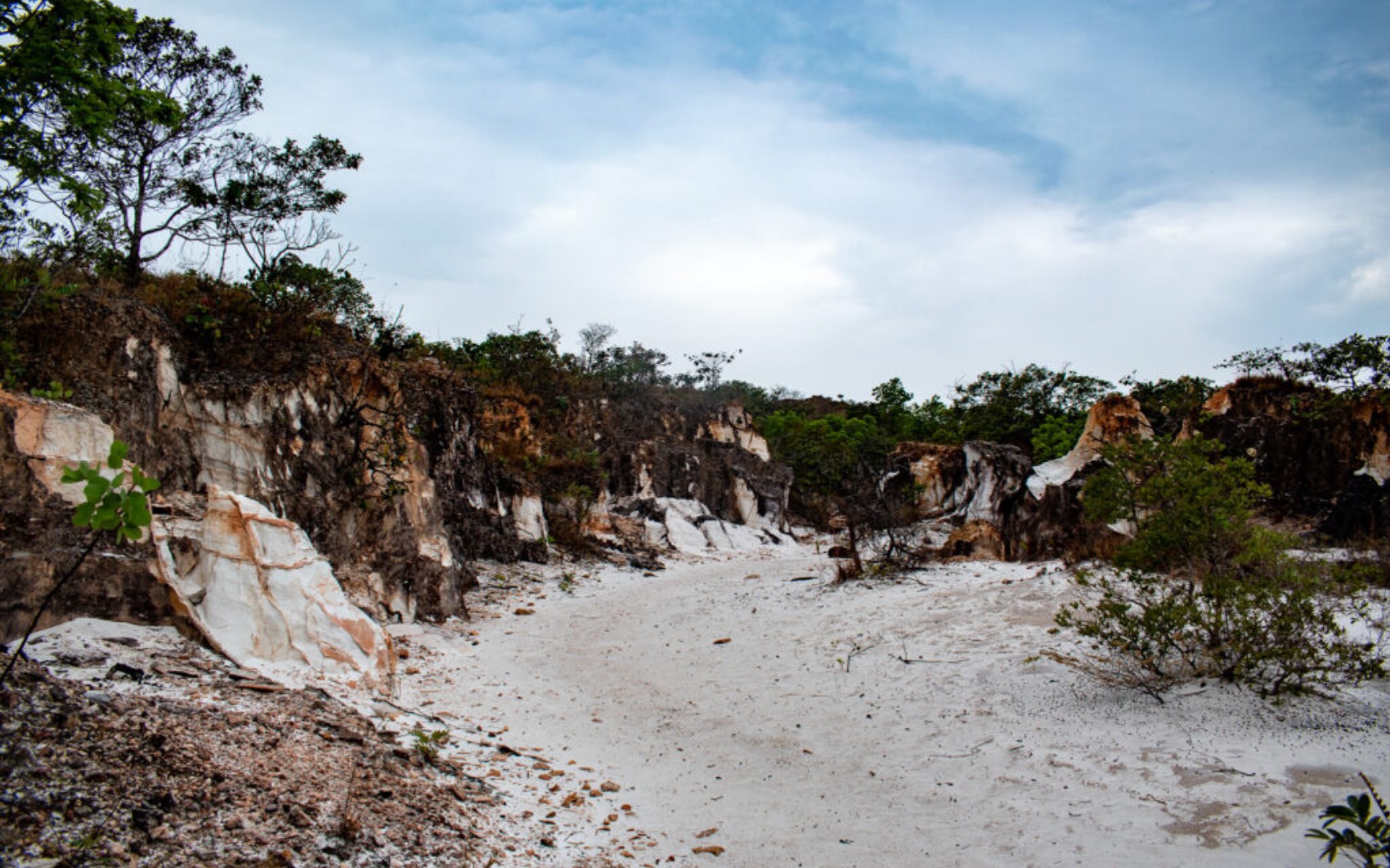
A striking natural phenomenon, dubbed a 'sea without a sea,' is captivating visitors in Goiás, Brazil. This unique sandy landscape is situated atop a mountain range within the Serra Dourada State Park (PESD), located in the municipality of Mossâmedes in western Goiás. The park, which also encompasses the municipalities of Cidade de Goiás and Buriti de Goiás, spans approximately 30,000 hectares and protects the entire Serra Dourada rock formation. This geological feature, estimated to be between 1 and 1.6 billion years old, is characterized by a unique 'hogback' relief. Professor Karla Faria from the Federal University of Goiás (UFG) explains that this formation consists of steep ridges supported by resistant rock layers, creating one sharp slope and one gentler, flatter side. The Serra Dourada's significance dates back to the bandeirantes' expeditions, who were drawn to its riches, leading to the establishment of an important settlement at its base that later became Goiás's first capital. Established in 2003, the park aims to preserve this significant rocky massif, which reaches an elevation of 1,080 meters. Beyond the sand dune area, the park features watercourses, viewpoints, caves, and peculiar rock formations resembling a stone city. Currently, access to the PESD is primarily through Mossâmedes, about 151 kilometers from Goiânia. However, due to ongoing land regularization processes, visitation is restricted to the UFG Biological Reserve. Technical, scientific, pedagogical, or large group visits require prior scheduling with the park administration.
The discovery and promotion of the 'Praia sem mar' in Goiás highlights the intersection of natural geological wonders and ecotourism potential. The Serra Dourada State Park's unique 'hogback' topography, formed over a billion years ago, presents a compelling case for conservation and responsible visitation. While the park's creation in 2003 aimed at preservation, the current restrictions due to land regularization suggest a need for robust governance frameworks to balance ecological protection with public access and economic opportunities derived from tourism. As Brazil navigates its future, understanding the long-term sustainability of such unique ecosystems, especially in the face of climate change and increasing human interest, will be crucial. The management of these natural assets requires a forward-looking approach that integrates scientific research, community engagement, and transparent administrative processes to ensure their preservation for future generations while allowing for educational and recreational use.
AI-generated to prompt reflection — not editorial opinion, not advice, not a statement of fact. How this works.