Universe's Expansion Outpaces Light Without Violating Einstein's Relativity
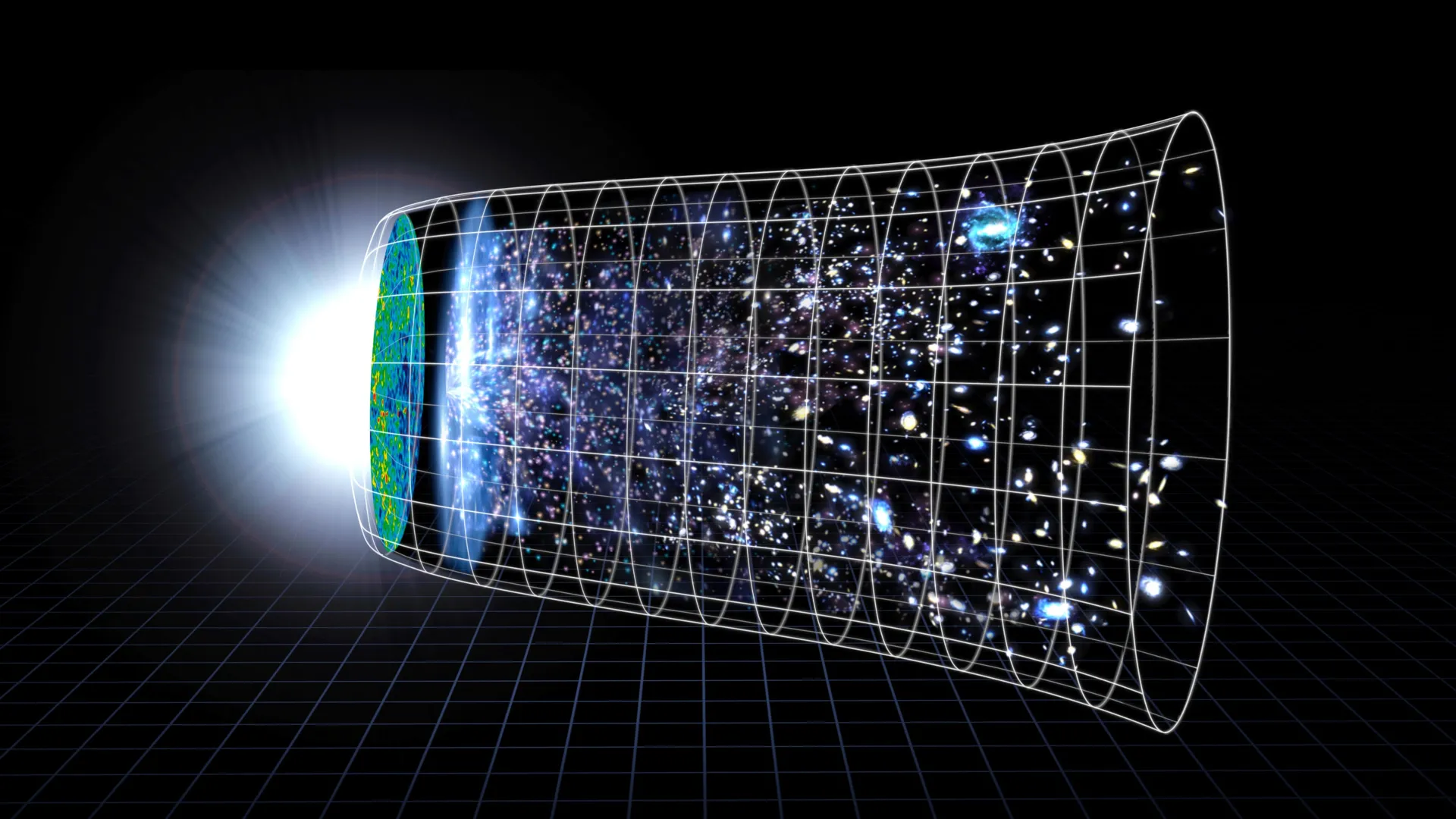
The expansion of the universe allows distant galaxies to recede from us at speeds exceeding the speed of light. This phenomenon does not violate Albert Einstein's theory of relativity. Instead, it explains how we can still observe ancient light emitted by these galaxies when they were significantly closer to us. However, the accelerating expansion of the universe has a profound implication for the future. Eventually, this relentless expansion will propel nearly every galaxy outside our Local Group beyond our observable horizon. Consequently, the universe will appear almost entirely empty to future observers. This cosmic eventuality highlights the dynamic and evolving nature of our observable universe.
The observation that cosmic expansion allows galaxies to recede faster than light, while still permitting the observation of their past emissions, illustrates a key distinction between the motion of objects through spacetime and the expansion of spacetime itself. This cosmological dynamic, while seemingly counterintuitive, is consistent with general relativity's framework. The projected future scenario, where accelerating expansion renders most galaxies unobservable, suggests a profound shift in our cosmic perspective. This raises questions about the long-term accessibility of cosmological data and the potential for future civilizations to comprehend the universe's past. Understanding these expansionary dynamics is crucial for refining cosmological models and anticipating the ultimate fate of our observable universe.
AI-generated to prompt reflection — not editorial opinion, not advice, not a statement of fact. How this works.