University of Michigan Team Designs Pressurized Tunnels for Mars Missions
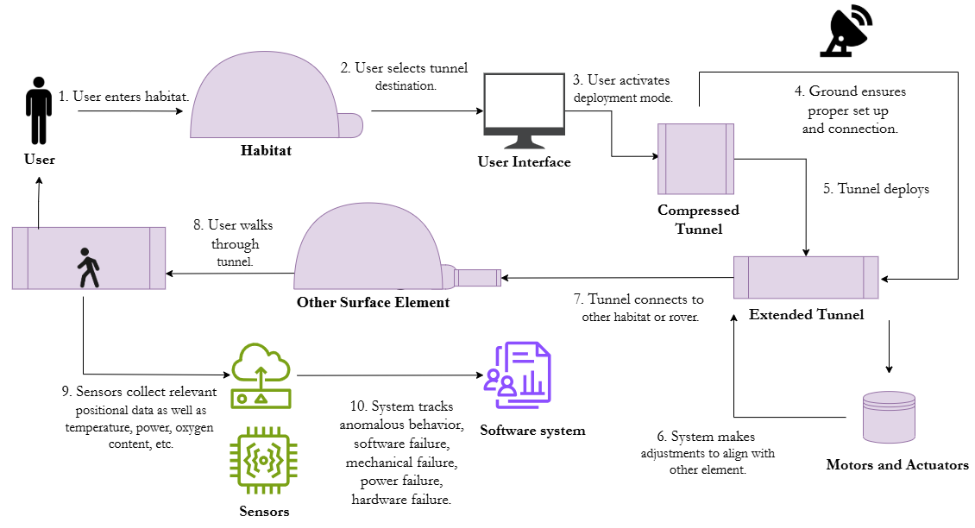
A team from the University of Michigan has proposed a novel retractable, pressurized tunnel system designed to enhance astronaut mobility and efficiency during missions to Mars. This innovative concept was developed as part of NASA's Moon to Mars eXploration Systems and Habitation (M2M X-Hab) 2026 Academic Innovation Challenge. The proposed tunnels would create a direct, pressurized connection between an astronaut's habitat and other surface elements on Mars. This would significantly reduce the time and effort required for astronauts to prepare for extravehicular activities (EVAs) and move between different modules or equipment. Such a system could streamline operations, improve safety by minimizing exposure to the Martian environment, and allow for more productive use of mission time. The M2M X-Hab challenge aims to foster innovative solutions for future space exploration systems and habitation.
This proposal addresses a critical logistical challenge for long-duration surface missions: efficient and safe transit between habitat modules and external equipment. By developing a pressurized, actuated tunnel system, the University of Michigan team aims to reduce EVA preparation time and astronaut exposure to the harsh Martian environment. This innovation aligns with the broader trend in space exploration of prioritizing habitat modularity and reducing operational overhead to maximize scientific return. Future Mars missions will likely benefit from such integrated systems, which could also have applications for lunar bases or even orbital construction, reflecting a growing need for robust, adaptable infrastructure in space.
AI-generated to prompt reflection — not editorial opinion, not advice, not a statement of fact. How this works.