US Air Force Establishing New Anti-Drone and Missile Defense Specialty
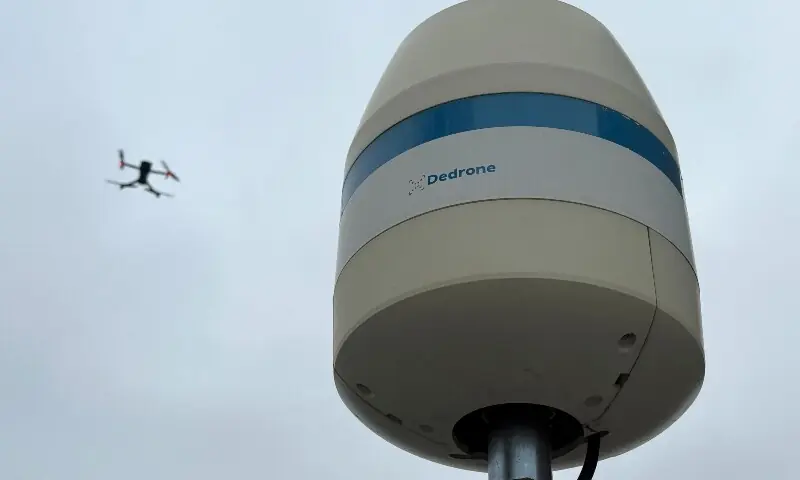
The United States Air Force is creating a specialized military role focused on defending air bases against missile and drone attacks. This initiative stems from recent conflicts that highlighted vulnerabilities at American military installations, particularly in the Middle East. A comprehensive internal review following the Iran conflict concluded that the escalating threat from affordable yet potent drones and precision-guided missiles necessitates dedicated personnel trained in base defense. The Air Force intends to establish specific air base defense units at select locations, consolidating personnel from various military occupations. These units will be trained to effectively detect, track, and neutralize incoming aerial threats. The decision was partly influenced by Ukraine's "Operation Spiderweb" in 2025, where drones targeted Russian bombers deep within Russian territory, prompting the Pentagon to re-evaluate its own base security. Incidents of unidentified drones over Langley Air Force Base in Virginia in late 2023, and similar occurrences at bases in Ohio, Utah, and Britain, further underscored the need for enhanced defenses. The urgency was amplified by Iranian missile and drone strikes during the recent Iran-US conflict, which damaged facilities in the Gulf, including aircraft and critical command centers at Al Udeid Air Base in Qatar and the US Navy's Fifth Fleet headquarters in Bahrain. The challenge is particularly pressing in the Indo-Pacific, where bases in Japan are within range of China's missile capabilities. While the US Army possesses Patriot missile defense systems, officials acknowledge an insufficient number of batteries to cover all Air Force installations. The Air Force is requesting approximately $1.4 billion in its proposed 2027 budget for a new air base missile defense system, though full operational capability is expected to take several years. Air Force Secretary Troy E. Meink has emphasized base protection as a growing priority, though the timeline for the new specialized force's operational status remains undetermined due to the time required for training program development and integration.
The establishment of a specialized anti-drone and missile defense force by the US Air Force reflects a strategic adaptation to evolving asymmetric warfare tactics. The increasing proliferation of low-cost, high-impact drone technology and precision-guided munitions presents a significant challenge to traditional military infrastructure, particularly fixed air bases. This move signifies a recognition that existing defense systems, often designed for state-level threats, may be insufficient against dispersed, non-state actors or peer adversaries employing novel attack vectors. The Air Force's investment in this new specialty and associated systems highlights a systemic tension between the rapid pace of technological innovation in offensive capabilities and the slower, more resource-intensive development cycles of defensive countermeasures. The focus on integrated base defense suggests a move towards a more layered and resilient security posture, acknowledging that no single system is foolproof. This strategic shift may also influence future force structure decisions, potentially prioritizing deployable, adaptable defense solutions over static installations, especially in contested regions like the Indo-Pacific.
AI-generated to prompt reflection — not editorial opinion, not advice, not a statement of fact. How this works.