US and Europe Diverge Despite NATO Summit
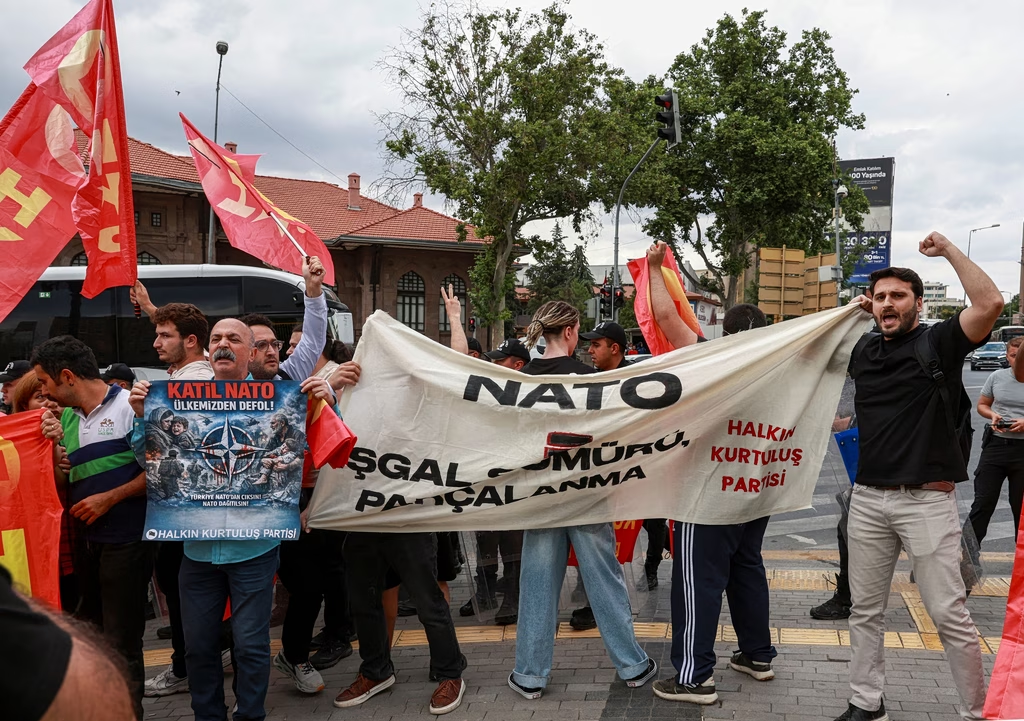
The upcoming NATO Summit in Ankara, regardless of any political maneuvering or attempts to project a different image, will not alter the fundamental reality of diverging paths between the United States and Europe. The summit is described not as a meeting of active collaboration, but rather as a symbolic commemoration of a past era. This sentiment suggests a significant shift in transatlantic relations, indicating that despite the formal gathering, the underlying strategic and political alignment is weakening. The article implies that the alliance is facing a period of introspection rather than forward-looking action. The 'essence' of the situation, according to the text, is this underlying division. The summit's outcome, even if outwardly appearing unified, will not mask this core divergence. This suggests a deeper, more structural separation is already underway. The focus is on the symbolic nature of the summit, framing it as a memorial rather than a functional meeting. The implication is that the era of strong, unified transatlantic policy may be drawing to a close.
The divergence between the US and Europe, as suggested by the article's framing of the NATO summit as a 'memorial,' points to evolving geopolitical priorities and strategic interests. This shift may be driven by differing economic pressures, security concerns, and approaches to global challenges. The underlying incentive structures for each bloc are likely re-calibrating in response to global power dynamics and domestic political considerations. Over the next decade, this divergence could manifest in varied trade policies, defense spending allocations, and diplomatic engagements, potentially leading to a more multipolar international landscape. Understanding these evolving dynamics is crucial for navigating future international cooperation and conflict.
AI-generated to prompt reflection — not editorial opinion, not advice, not a statement of fact. How this works.