US and Iran Escalate Attacks, Raising Fears of Full-Scale Regional War
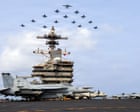
The United States has intensified its military actions against Iran, launching strikes on targets near Tehran and hitting a vessel allegedly attempting to breach a US blockade. In response, Iran has retaliated with missile and drone attacks directed at US allies within the region. This escalating conflict has now entered its sixth consecutive day, significantly increasing the risk of a full-scale war across the Middle East. The ongoing hostilities also cast considerable doubt on the viability of an interim peace deal that was brokered just last month, which was intended to pave the way for a lasting resolution. The situation remains volatile, with ongoing chaos and confusion hindering the US efforts to resolve the critical issues surrounding the Strait of Hormuz. The continued exchange of fire jeopardizes regional stability and threatens to unravel diplomatic progress.
The escalating military exchanges between the US and Iran, alongside attacks on regional allies, represent a critical juncture where diplomatic channels appear strained. The intensification of hostilities, particularly after a recent peace accord, suggests underlying strategic disagreements or a breakdown in trust that the interim deal failed to address. This dynamic highlights the complex geopolitical incentives at play, where actions perceived as defensive by one party are interpreted as escalatory by another. Looking ahead, the persistent friction around vital maritime chokepoints like the Strait of Hormuz underscores the fragility of regional security architectures in the face of asymmetric capabilities and competing national interests. The challenge lies in de-escalating without compromising perceived security imperatives, a delicate balance that requires robust multilateral engagement beyond bilateral confrontation.
AI-generated to prompt reflection — not editorial opinion, not advice, not a statement of fact. How this works.