US and Iran exchange strikes for tenth consecutive night amid Strait of Hormuz tensions
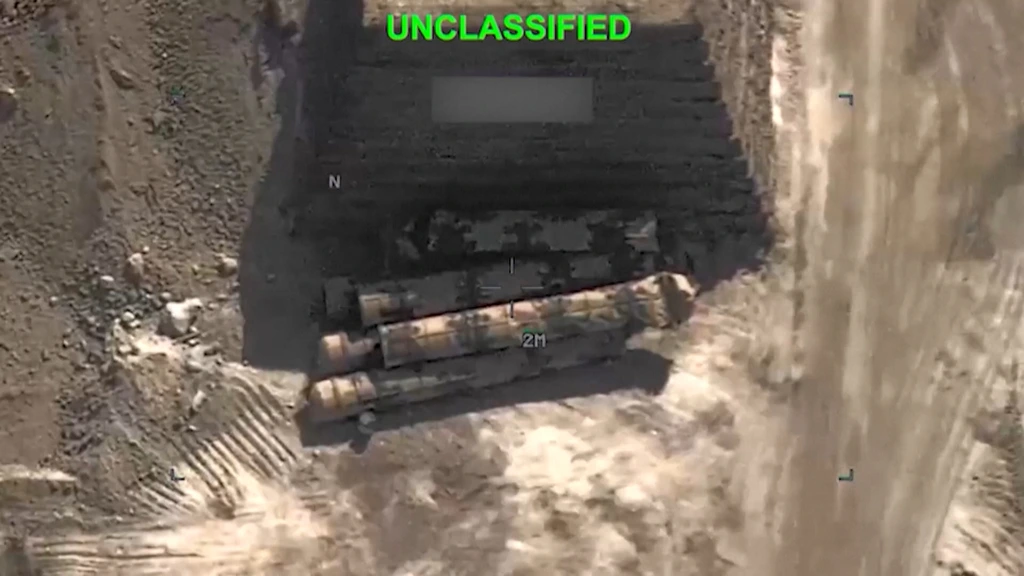
For the tenth night in a row, the United States has conducted strikes against targets in Iran, according to the U.S. military. These actions targeted military sites including command centers, launch facilities, air defense systems, and maritime objectives. The U.S. stated its aim is to degrade Iran's capacity to attack commercial shipping in the Strait of Hormuz. Local media reported explosions in Abdanan, southwestern Iran, though the provincial governor confirmed no casualties, and damage assessments remain undisclosed.
Concurrently, Iran's military launched attacks on various regional targets. State news agency IRNA reported Iranian strikes on Jordan, Bahrain, and Kuwait, with a U.S. military base in Kuwait reportedly targeted at radar installations, satellites, and missile systems. Separately, a commercial oil tanker in the Strait of Hormuz was struck by an unidentified projectile, according to the UK Maritime Trade Operations (UKMTO). The crew abandoned the vessel and reached safety via a lifeboat. This incident occurred near Oman, and UKMTO is investigating. A fire on another vessel in the same area yesterday is also suspected to be an attack.
The Strait of Hormuz, a vital artery for global oil trade, has seen its shipping traffic severely disrupted by Iran since early February. The U.S. has responded by blocking vessels heading to Iranian ports to curb oil exports. Despite a recent memorandum of understanding signed by Iran and the U.S. for an immediate ceasefire and the restoration of passage through the Strait, the ceasefire has not materialized. Iran suspended its participation in the understanding on Saturday, following President Trump's earlier withdrawal at the NATO summit in Ankara. While the U.S. expresses a desire for renewed talks, both nations continue to respond to each other's actions with further strikes.
The escalating military exchanges between the U.S. and Iran, particularly concerning the Strait of Hormuz, highlight a complex interplay of geopolitical strategy, economic interests, and regional security dynamics. The U.S. actions appear aimed at deterring Iranian aggression against commercial shipping, a critical global trade route. Iran's counter-strikes and disruption of maritime traffic suggest a strategy to leverage its geographic position and exert influence. The breakdown of the recent ceasefire and de-escalation agreement underscores the persistent trust deficit and the challenges in achieving diplomatic resolutions amidst ongoing hostilities. Future stability in the region will likely depend on navigating these competing pressures, potentially through multilateral engagement that addresses both security concerns and the underlying economic factors driving the conflict.
AI-generated to prompt reflection — not editorial opinion, not advice, not a statement of fact. How this works.