US and Iran Exchange Strikes for Third Consecutive Night
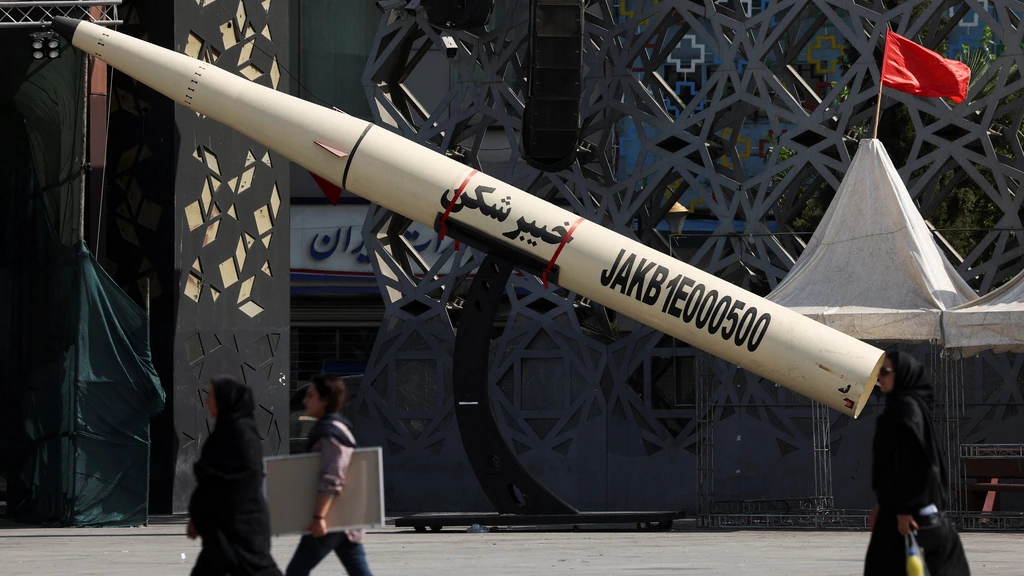
The United States and Iran have engaged in retaliatory attacks for a third consecutive night, escalating tensions in the Middle East. U.S. Central Command (Centcom) announced that President Trump ordered strikes against targets in Iran, which he described as a "major attack" intended to curb Iran's actions against civilian and commercial shipping in the Strait of Hormuz. Trump had previously stated that Iran would be "hit hard" and linked the actions to the Strait of Hormuz. He also mentioned targeting the Pichaxe mountain near Iran's Natanz nuclear facility.
Explosions were reported by Iranian state media in Bandar Abbas, a key port city on the Strait of Hormuz, and on the islands of Qeshm, Abu Musa, and Kish in the Persian Gulf, as well as in Bushehr province. Iranian media claimed their military fired a cruise missile at an "enemy American ship." The United Arab Emirates' Ministry of Defense reported that two of its tankers were attacked by Iranian cruise missiles in Omani waters, resulting in one Indian crew member's death and eight injuries, with four critically wounded. Fires on the tankers have been contained. The UAE reserves the right to respond to such escalations.
Furthermore, the Iranian military stated it attacked a U.S. military base in Kuwait with drones, with no casualties reported. A projectile reportedly hit a target in Erbil, Iraq, though no casualties were confirmed and Iran's responsibility is unclear. These developments follow President Trump's recent proposal for countries transiting the Strait of Hormuz to pay a toll, seeking compensation for U.S. protection in the vital waterway. Trump indicated that the strikes aim to diminish Iran's offensive capabilities, while also suggesting a potential deal between the two nations remains possible despite the breakdown of a recent ceasefire.
The escalating exchange of strikes between the U.S. and Iran highlights the persistent volatility in the Strait of Hormuz, a critical global chokepoint for energy and trade. The U.S. justification for strikes, framed as a response to Iranian aggression against shipping, points to a strategic imperative to maintain freedom of navigation and deter regional destabilization. However, Iran's counter-narrative of attacking an "enemy American ship" and targeting U.S. bases suggests a reciprocal dynamic of deterrence and retaliation. The proposed toll by the U.S. for passage through the Strait, if implemented, could introduce a novel economic leverage mechanism, potentially altering regional trade dynamics and creating new avenues for dispute. This situation underscores the complex interplay of geopolitical interests, economic dependencies, and security concerns that define the strategic landscape of the Persian Gulf, with significant implications for global energy markets and international maritime law in the coming decade.
AI-generated to prompt reflection — not editorial opinion, not advice, not a statement of fact. How this works.