US and Pakistan Report Significant Progress on Proposed Trade Agreement
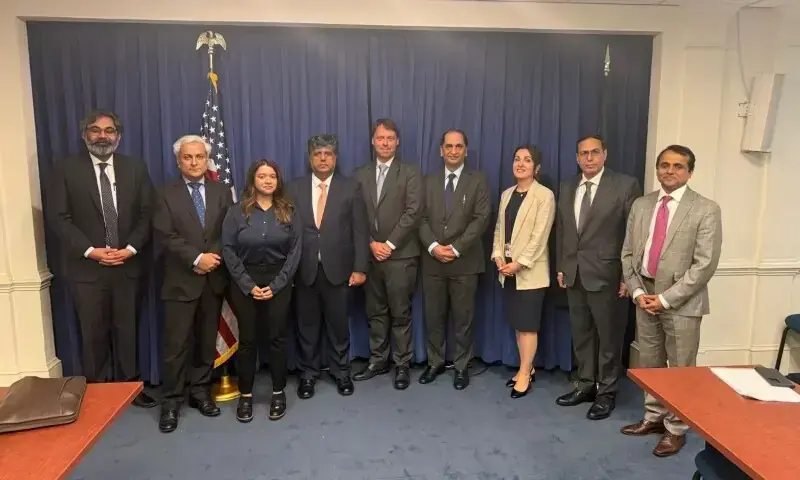
Pakistan and the United States have achieved "significant progress" in recent negotiations for a proposed reciprocal trade agreement. The two-day talks, held in Washington D.C. on Thursday and Friday, were led by Commerce Secretary Jawad Paul and aimed to resolve tariff-related issues and enhance economic cooperation. Foreign Office spokesperson Tahir Andrabi described the discussions as positive and productive, noting that both sides worked to address differences and build consensus for an early agreement. The Pakistani delegation included Secretary Nadeem Chaudhary and Joint Secretary Mohammad Ashfaq, with virtual participation from other ministries. Discussions extended beyond tariffs to encompass broader economic cooperation in sectors such as energy, information technology, mining, and investment. These talks build upon previous engagements concerning tariff concerns and commercial ties, including Pakistan's response to U.S. Section 301 investigations into alleged forced labor practices. Progress has reportedly been made on tariff issues, with proposed U.S. duties on certain Pakistani exports potentially decreasing from 29% to approximately 19% by August 2025. Both nations have expressed a desire to increase collaboration in critical minerals, energy development, IT, and emerging economic sectors. The U.S. is Pakistan's largest export market, and Pakistan is a major importer of U.S. cotton, highlighting the economic significance of their relationship.
The reported progress in U.S.-Pakistan trade talks signals a potential recalibration of economic ties, moving beyond geopolitical considerations to focus on mutual commercial interests. The inclusion of diverse sectors like energy, IT, and critical minerals suggests an alignment with global economic trends and future technological demands. However, the ongoing U.S. Section 301 investigations into labor practices introduce a complex layer, indicating that market access may be contingent on adherence to evolving international labor standards. This dynamic highlights the increasing intersection of trade policy with human rights and governance, a trend likely to shape global commerce in the coming decade. The U.S. seeking to diversify supply chains and Pakistan aiming for greater market access creates a framework for negotiation, where both nations must balance economic incentives with regulatory and ethical compliance.
AI-generated to prompt reflection — not editorial opinion, not advice, not a statement of fact. How this works.