US and Saudi Arabia Sign 30-Year Nuclear Cooperation Deal Amid Regional Concerns
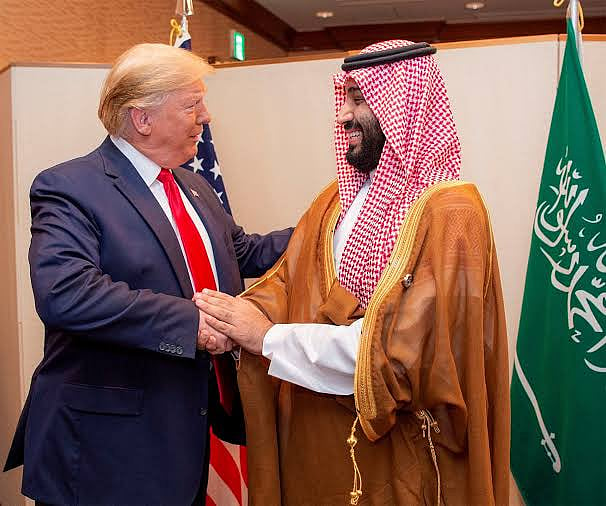
The United States and Saudi Arabia have finalized a 30-year nuclear cooperation agreement, known as a '123 Agreement,' allowing Washington to assist Riyadh in developing its nuclear program. Signed by U.S. Energy Secretary Chris Wright and Saudi Energy Minister Abdulaziz bin Salman, the deal permits U.S. companies to transfer nuclear technology abroad, operating under Section 123 of the U.S. Atomic Energy Act. While most details remain undisclosed, analysts express concerns about insufficient safeguards to prevent a nuclear arms race in the already volatile Middle East. Both nations are signatories to the Nuclear Non-Proliferation Treaty (NPT), but the International Atomic Energy Agency (IAEA), which monitors non-proliferation, was not directly involved in this bilateral pact, leaving the application of safeguards unclear. Furthermore, Saudi Arabia's non-membership in the Nuclear Suppliers Group (NSG), a 48-nation body controlling nuclear exports, raises questions about how the kingdom will obtain key nuclear materials and technology. This agreement adds to several existing, largely civilian, nuclear programs in the Middle East. The deal will undergo a 90-day review by the U.S. Congress, where it may face opposition from both Republican and Democratic lawmakers, though it is not expected to be blocked. Westinghouse and other U.S. reactor manufacturers are anticipated beneficiaries of this agreement. The agreement is expected to ensure Saudi Arabia's program remains within the scope of civilian reactor needs and does not approach weapons-grade capabilities, potentially involving U.S. inspections for verification. U.S. Secretary of State Antony Blinken stated that the U.S. would not enter agreements that risk nuclear proliferation.
The recent U.S.-Saudi nuclear cooperation agreement, while framed as civilian, introduces new dynamics into a region already grappling with nuclear proliferation concerns, particularly regarding Iran and Israel. The pact's opacity regarding safeguards and Saudi Arabia's non-member status in the Nuclear Suppliers Group raise questions about long-term regional stability and the effectiveness of international non-proliferation frameworks. The U.S. government's stated commitment to preventing proliferation is tested by the potential for dual-use technology transfer, highlighting an inherent tension between energy cooperation and security imperatives. Future developments will likely depend on the robustness of oversight mechanisms and the geopolitical responses from other regional actors, potentially spurring further nuclear development or heightened tensions over the next decade.
AI-generated to prompt reflection — not editorial opinion, not advice, not a statement of fact. How this works.