US and Saudi Arabia Strike Iran-Backed Militias in Iraq, Raising Regional Tensions
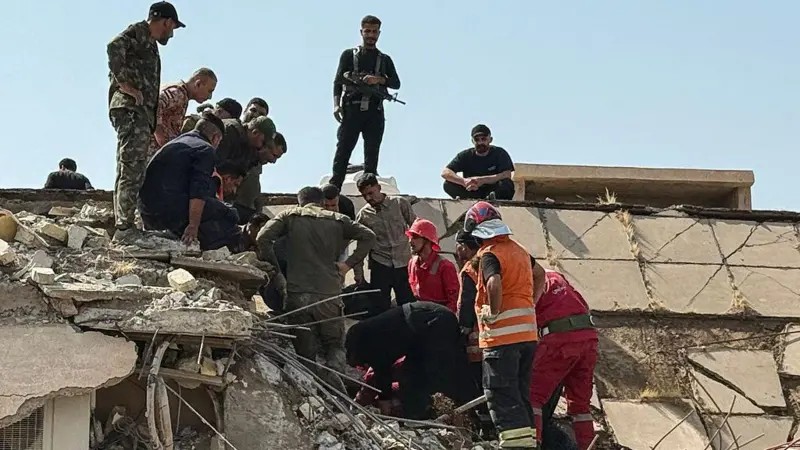
The United States and Saudi Arabia have conducted joint airstrikes against Iran-backed militias in Iraq, escalating regional tensions. The U.S. Central Command (Centcom) stated the targets were "Iran-aligned terrorists" directed by the Islamic Revolutionary Guard Corps (IRGC) to attack U.S. forces and Saudi energy infrastructure. These strikes followed an alleged Iranian missile launch targeting U.S. forces in the Middle East, which Centcom reported as successfully intercepted. The IRGC claimed responsibility for missile attacks on a U.S. airbase in Jordan and attacks on three oil tankers in the Strait of Hormuz, citing retaliation for U.S. actions. In Iraq, the Popular Mobilization Forces (PMF), a coalition of Iran-aligned Shia militias integrated into the Iraqi armed forces, reported at least 20 of their members killed and 32 injured in the U.S.-Saudi strikes. The PMF condemned the attacks as a "dangerous escalation" and a violation of Iraqi sovereignty. Saudi Arabia had previously announced intercepting drones targeting its oil facilities, attributing them to Iran-linked militias operating from Iraq. The renewed hostilities occurred shortly after a period of de-escalation, with previous U.S. strikes targeting Iran. The conflict's proximity to the Strait of Hormuz, a vital energy transit route, has led to concerns about potential disruptions and a subsequent rise in oil prices.
The recent joint U.S.-Saudi strikes against Iran-aligned militias in Iraq represent a significant recalibration of regional security dynamics. By directly targeting entities linked to the IRGC, both nations signal a strategic shift towards proactive deterrence against Iranian proxy actions. This move, however, carries inherent risks of further escalation, potentially drawing more regional actors into direct confrontation and impacting global energy markets via the Strait of Hormuz. The situation highlights the complex interplay between state-sponsored actions and non-state actors in the Middle East, where the lines between proxy warfare and direct state involvement are increasingly blurred. Future developments will likely hinge on the IRGC's response, the internal political considerations within Iran and Iraq, and the broader geopolitical strategies of the involved global powers, particularly in the context of evolving energy security imperatives.
AI-generated to prompt reflection — not editorial opinion, not advice, not a statement of fact. How this works.