US backs Pakistan's self-defense right amid UN counterterrorism strategy dispute
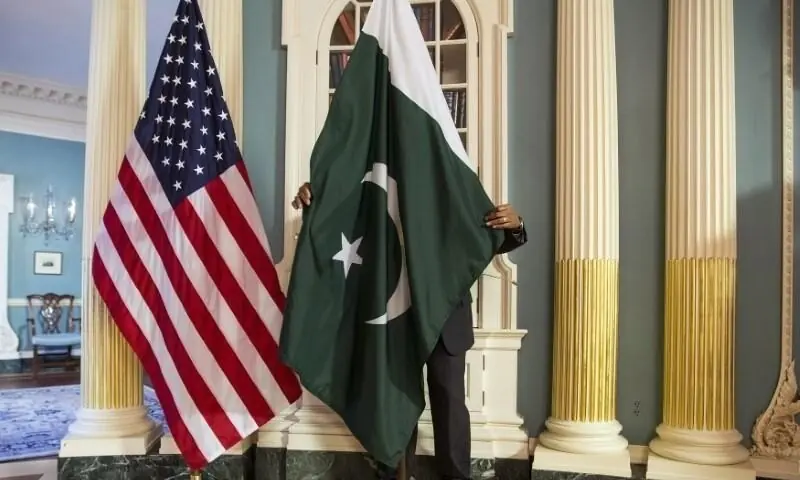
The United States has reaffirmed its support for Pakistan's right to self-defense against terrorist attacks, a stance reiterated by the US State Department. This statement follows Pakistan's recent actions against terrorist infrastructure along the Afghan border, which were a response to a terrorist attack on a Pakistan Rangers Sindh headquarters in Karachi. The US had previously expressed similar support in February, emphasizing close monitoring of the situation. These remarks coincide with the ninth review of the United Nations Global Counterterrorism Strategy (GCTS), a framework established in 2006. During the UN General Assembly, the US broke with tradition by voting against the resolution and demanding a recorded vote, citing the draft as "bloated, outdated, and lacking focus." Despite US objections, the General Assembly adopted the ninth review of the GCTS on July 1 with 140 votes in favor, including Pakistan, though the US, Israel, and Argentina voted against it. Japan abstained due to a technical error but intended to vote in favor. Pakistan's Permanent Representative to the UN, Ambassador Asim Iftikhar Ahmad, highlighted that terrorism is an evolving global threat and that Pakistan has suffered significant losses, with over 1,200 Pakistanis killed in terrorist attacks in the past year. He expressed disappointment that the review failed to address gaps or incorporate concerns from the Organisation of Islamic Cooperation (OIC). Ambassador Ahmad also called for a comprehensive multilateral approach, including addressing emerging physical and virtual threats, unresolved conflicts, and respecting human rights, while rejecting any equation of legitimate struggles for self-determination with terrorism. He urged for stronger condemnation of state actions against populations under foreign occupation and called for regulating social media and digital financial systems to prevent misuse by terrorist networks.
The divergence between the US and a majority of UN member states on the Global Counterterrorism Strategy review highlights differing perspectives on contemporary security threats and international cooperation. While the US advocates for a streamlined, focused approach, many nations, including Pakistan, emphasize the need for a broader strategy that addresses evolving threats, state actions, and the root causes of extremism. The US emphasis on self-defense rights for Pakistan, juxtaposed with its objections to the GCTS, suggests a complex geopolitical calculus where bilateral security interests may influence multilateral engagement. This situation underscores the challenge of achieving global consensus on counterterrorism in an era of shifting alliances and diverse national security priorities, prompting a re-evaluation of how international frameworks can adapt to both traditional and emerging threats, including those facilitated by digital technologies.
AI-generated to prompt reflection — not editorial opinion, not advice, not a statement of fact. How this works.