US-Bangla Airlines Celebrates 12 Years, Operates 25 Aircraft to 20 Destinations
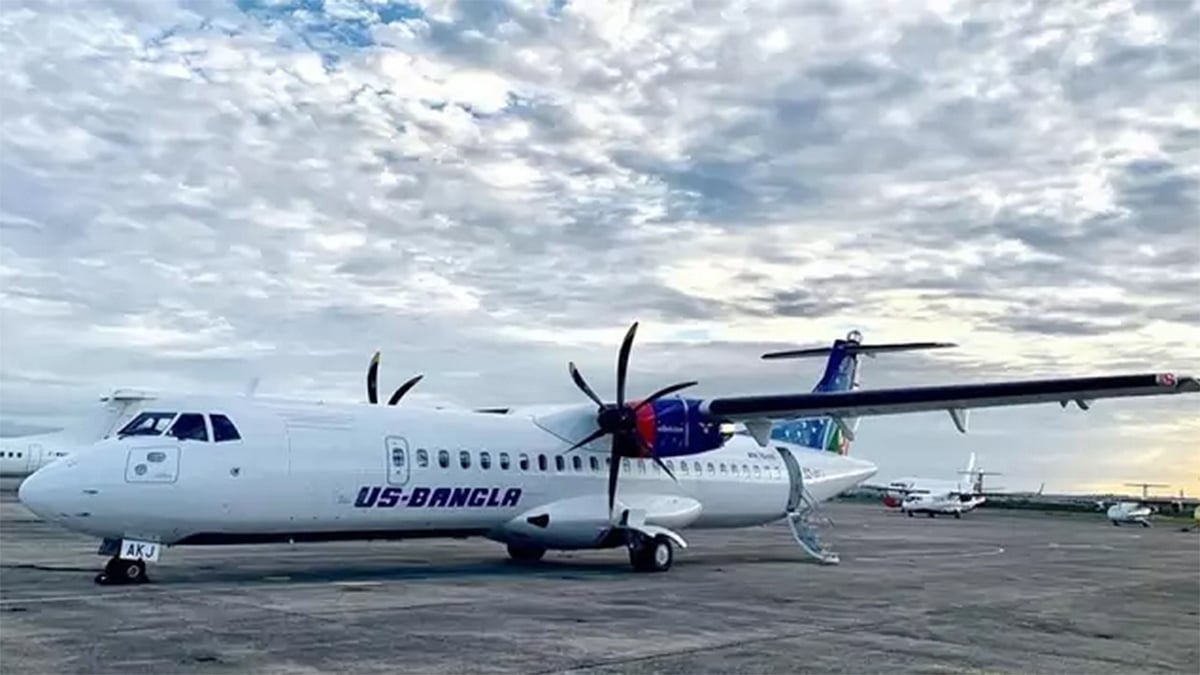
US-Bangla Airlines, a leading private carrier in Bangladesh, has marked its 12th anniversary. The airline commenced operations on July 17, 2014, with a Dash 8-Q400 aircraft flying the Dhaka-Jessore route. Today, its fleet comprises 25 aircraft, including three Airbus planes and nine Boeings. To commemorate its anniversary, the airline expressed gratitude to its well-wishers, highlighting that over 90% of its flights have operated on schedule since its inception. Domestically, US-Bangla serves routes from Dhaka to Chittagong, Cox's Bazar, Sylhet, Saidpur, and Rajshahi. The airline expanded internationally on May 15, 2016, with its first flight to Kathmandu, Nepal. Currently, it operates international flights to 14 cities: Kolkata, Chennai, Malé, Muscat, Doha, Dubai, Sharjah, Abu Dhabi, Jeddah, Riyadh, Kuala Lumpur, Singapore, Bangkok, and Guangzhou. US-Bangla plans to significantly expand its fleet by 2027, expecting to add 15 Boeing 737-8 and six Boeing 737-800 Next Generation aircraft. The airline also intends to re-establish flights to Kathmandu this year. Future expansion plans, driven by demand from expatriate Bangladeshis, include launching services to Kuwait, Bahrain, Madinah, Dammam, Colombo, and Johor Bahru and Penang in Malaysia, as well as Hong Kong by 2027. Further long-term ambitions involve flights to Europe, including London and Rome, by 2028, and to New York, Toronto, and Sydney by 2030. US-Bangla Airlines has been recognized as the Best Domestic Airline in 2025, having received the same award for the preceding three years and also in 2015. Mohammad Abdullah Al-Mamun, the airline's Managing Director, stated their readiness to face competitive challenges and emphasized the importance of modern aircraft for providing excellent passenger service, aligning the airline's growth with the nation's economic progress.
US-Bangla Airlines' ambitious expansion plans, spanning fleet growth, new international routes, and long-term intercontinental aspirations, demonstrate a strategic intent to capture a significant share of both domestic and international aviation markets. The airline's focus on fleet modernization, particularly with Boeing 737 variants, aligns with industry trends for efficiency and passenger comfort. However, achieving such rapid growth, especially into long-haul markets like Europe and North America by 2028-2030, will necessitate substantial capital investment, robust operational infrastructure, and navigating complex regulatory environments. The airline's consistent domestic awards suggest strong operational execution, but scaling this to global standards presents a different magnitude of challenge. Future success will likely hinge on managing operational costs, securing favorable bilateral air service agreements, and adapting to evolving global travel demands and geopolitical stability, particularly in the context of increasing competition and potential economic headwinds.
AI-generated to prompt reflection — not editorial opinion, not advice, not a statement of fact. How this works.