US Bans Chinese Humanoid Robots, Beijing Cites 'Generalized National Security'
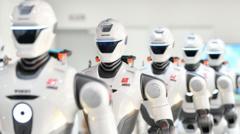
The United States has imposed a ban on the import of humanoid robots from China, a move that has drawn sharp criticism from Beijing. China's Ministry of Commerce accused the U.S. of generalizing national security concerns to restrict trade, stating that the ban unfairly targets Chinese companies. This action escalates the ongoing technological competition between the two global powers, particularly in the critical fields of robotics and artificial intelligence. Both nations are vying for dominance in these rapidly advancing sectors, which are seen as crucial for future economic and military strength. The U.S. ban is likely to be perceived by China as a protectionist measure aimed at hindering its technological progress and global market access. This trade dispute adds another layer of complexity to the already strained relationship between Washington and Beijing, highlighting the strategic importance of AI and robotics in their geopolitical rivalry.
The U.S. ban on Chinese humanoid robots, framed by Beijing as an overreach of national security, underscores the intensifying geopolitical competition in advanced technologies. This move reflects a broader trend of nations employing trade restrictions and national security justifications to manage perceived threats from rivals in critical sectors like AI and robotics. Such policies, while aiming to protect domestic industries and national interests, risk fragmenting global supply chains and hindering collaborative innovation. The long-term implications involve potential bifurcation of technological ecosystems and increased costs for consumers and businesses globally. This dynamic highlights the inherent tension between national security imperatives and the benefits of open technological exchange in the pursuit of global leadership.
AI-generated to prompt reflection — not editorial opinion, not advice, not a statement of fact. How this works.