US Central Command Resumes Naval Blockade of Iranian Ports with 20 Ships and Hundreds of Aircraft
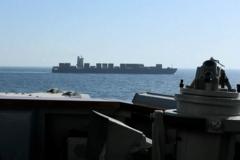
The U.S. Central Command (CENTCOM) has announced the resumption of a naval blockade on southern Iranian ports, deploying 20 warships and hundreds of fighter jets. This action coincides with reports from Iranian officials detailing a new wave of U.S. strikes targeting locations in southern Iran, including Abadan, Mahshahr, and Bushehr. Prior to these U.S. strikes, Iran's Islamic Revolutionary Guard Corps (IRGC) had reported targeting two "offending" oil tankers and U.S. bases in Bahrain and Jordan. Concurrently, former U.S. President Donald Trump has modified his earlier stance, now proposing a 20% tariff on vessels transiting the Strait of Hormuz, suggesting this could be replaced by investments from Persian Gulf countries.
The U.S. Central Command's stated resumption of a naval blockade and subsequent strikes in southern Iran, alongside Iran's reported retaliatory actions, indicates a significant escalation in regional tensions. This dynamic suggests a strategic calculus involving deterrence, signaling, and potentially economic pressure, with the Strait of Hormuz serving as a critical chokepoint. The proposed tariff adjustment by former President Trump, shifting from direct tolls to investment-based mechanisms, reflects an evolving approach to managing maritime transit and regional economic influence. The interplay between military posturing and economic incentives highlights the complex governance challenges in ensuring freedom of navigation and stability within this vital global trade route, particularly in the context of evolving geopolitical alliances and energy market dynamics over the next decade.
AI-generated to prompt reflection — not editorial opinion, not advice, not a statement of fact. How this works.