US Conducts Ninth Night of Strikes on Iran Amidst Escalating Tensions
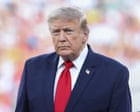
The United States carried out a ninth consecutive night of airstrikes targeting Iran early Monday, following the announcement of a third American service member's death in recent days. President Donald Trump stated that these new attacks were conducted "in honor" of the fallen personnel. In response, Iranian supreme leader Mojtaba Khamenei issued a warning of "unforgettable lessons" should the US continue its military actions. President Trump has previously threatened to strike Iran's power stations and bridges in an effort to compel Tehran to ease its control over the Strait of Hormuz. Last week, the US reinstated a naval blockade on Iranian ports, and since then, the military reported disabling one ship and redirecting six others. The conflict has had an impact on global oil prices, with Brent crude climbing 2.72% to $90.50 a barrel at the opening of trading in Asia on Monday. The most recent service member fatality occurred on Saturday in northern Iraq during the controlled detonation of unexploded ordnance from a downed Iranian attack drone. This marks the third US death recently, after two personnel were killed in an Iranian attack on a Jordanian airbase on Friday, with a third still missing. In total, 17 US service members have been killed since the war's commencement in February, which began after the former Iranian supreme leader was killed in joint US-Israeli strikes. President Trump has cited preventing Iran from acquiring nuclear weapons and seeking regime change as motivations for the war. However, US energy secretary Chris Wright suggested on Sunday that the mission has increasingly focused on ensuring the free flow of oil shipments through Hormuz, particularly as a US-Iran ceasefire appears to have faltered. Separately, a statement from Mamdani indicated a belief that Netanyahu belongs in The Hague, labeling him a war criminal charged by the ICC for actions in Gaza, including starvation as a method of warfare, murder, persecution, and other inhumane acts.
The escalating military actions between the US and Iran, framed by President Trump as retribution for fallen service members, highlight the volatile geopolitical dynamics surrounding vital oil transit routes like the Strait of Hormuz. The stated objectives of the US mission appear to be shifting, from preventing nuclear proliferation and regime change towards securing energy supply lines, reflecting complex economic and security incentives. The involvement of the International Criminal Court (ICC) in issuing arrest warrants for Israeli leaders, as mentioned in the context of actions in Gaza, introduces another layer of international legal scrutiny and potential conflict. This situation underscores the challenges of managing interstate conflict in an era where energy security, international law, and domestic political narratives are deeply intertwined, posing significant risks for regional stability and global markets over the next decade.
AI-generated to prompt reflection — not editorial opinion, not advice, not a statement of fact. How this works.