US Conducts Second Day of Strikes on Iran Amid Escalating Tensions
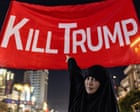
The United States military conducted strikes on Iran for a second consecutive day, following President Donald Trump's declaration that an interim agreement to end the war was "over." Iranian state media reported explosions in multiple locations, including the port city of Bandar Abbas, Sirik, and the Bushehr province, which houses Iran's nuclear power plant complex. US Central Command confirmed these strikes. These actions followed an incident on Tuesday where three cargo ships transiting the Strait of Hormuz were attacked, marking the most significant exchange of fire since a ceasefire agreement was reached last month. President Trump stated at the Nato summit in Ankara that while the latest strikes would not lead to prolonged military action, Iran was "behaving very badly" and accused them of launching drones and missiles at vessels. The renewed hostilities have had economic repercussions, with US stock markets declining and Brent crude oil prices surging over 5% to exceed $80 a barrel. The International Monetary Fund has lowered its global economic growth forecast to 3% due to the conflict in the Middle East. Analysts note that tanker traffic through the Strait of Hormuz has effectively halted, indicating heightened risk perception in the region.
The escalation of military actions between the US and Iran, particularly around the Strait of Hormuz, highlights the persistent volatility in geopolitical hotspots. The disruption of vital shipping lanes and the subsequent impact on global oil prices and economic growth forecasts underscore the interconnectedness of regional stability and international commerce. This situation presents a classic case of security dilemmas, where actions taken by one state to enhance its security are perceived as threatening by another, leading to a cycle of retaliatory measures. Future developments will likely depend on the strategic calculations of both nations, the effectiveness of international diplomatic efforts, and the broader implications for global energy markets and supply chains in the coming decade.
AI-generated to prompt reflection — not editorial opinion, not advice, not a statement of fact. How this works.