US Congressmen Meet Pakistan Army Chief, Discuss Regional Stability and Economic Ties
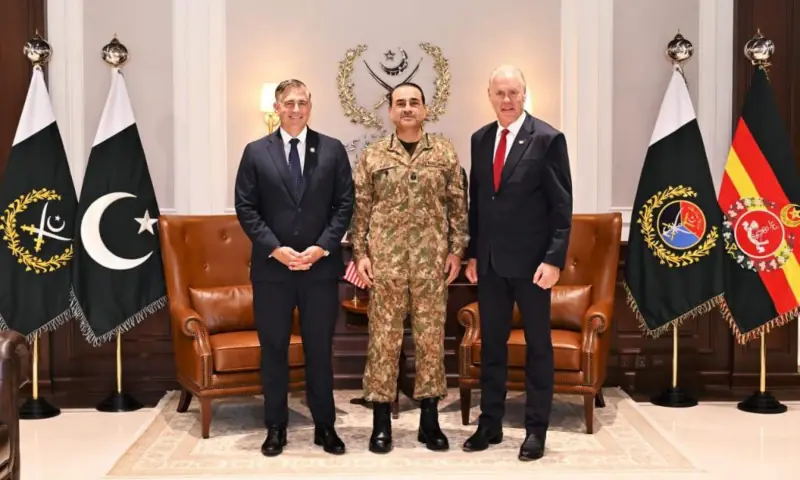
Two visiting US congressmen, Ryan Keith Zinke and Michael James, met with Pakistan's Chief of Defence Forces (CDF) and Chief of the Army Staff, Field Marshal Asim Munir, at General Headquarters in Rawalpindi. The Inter-Services Public Relations (ISPR) reported that discussions centered on mutual interests, regional security, defense cooperation, and enhancing economic collaboration. The congressmen acknowledged Pakistan's "critical role" in regional stability and recognized its economic resilience. Field Marshal Munir highlighted Pakistan's economic potential, emphasizing that sustainable stability is linked to economic growth, trade, and connectivity. He also noted the country's ongoing structural reforms designed to improve the business environment and attract foreign investment. Both sides explored opportunities for bilateral economic engagement, private sector partnerships, and increased trade. The delegation expressed commitment to strengthening economic, commercial, and institutional ties between the US and Pakistan. Earlier in their visit, Zinke and James met with Punjab Governor Sardar Saleem Haider Khan in Lahore and toured historical sites and the Punjab Safe Cities Authority. They also praised Pakistan's mediation efforts between the US and Iran. Both nations are interested in expanding collaboration in critical minerals, energy, IT, and other emerging economic sectors, with Pakistan seeking greater market access in the US, its largest export market.
This interaction underscores the ongoing strategic importance of Pakistan in regional security dynamics, particularly from the perspective of US foreign policy interests. The emphasis on economic collaboration and investment highlights a potential shift towards leveraging Pakistan's economic potential as a stabilizing factor, moving beyond traditional security-focused engagements. The acknowledgement of Pakistan's mediation role suggests a recognition of its diplomatic utility. Future engagement will likely be shaped by Pakistan's ability to implement structural reforms that genuinely foster a conducive environment for foreign investment and trade, thereby aligning its economic development with broader geopolitical objectives and potentially mitigating internal vulnerabilities that could impact regional stability.
AI-generated to prompt reflection — not editorial opinion, not advice, not a statement of fact. How this works.