US Defends Argentina's Freedom of Expression Over Falklands/Malvinas Banner
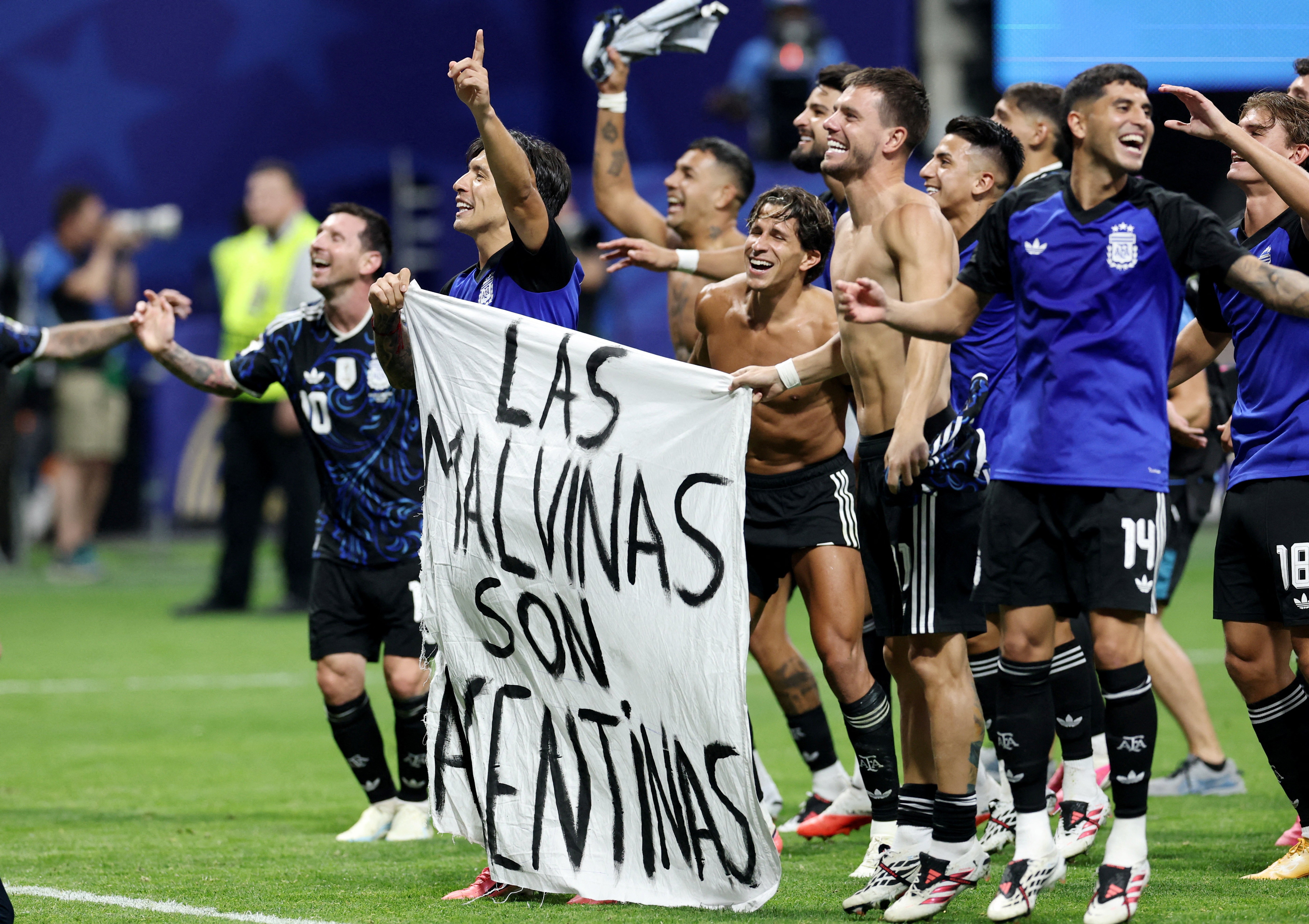
The White House has defended the Argentine national football team's right to freedom of expression after players displayed a banner supporting Argentina's territorial claim over the Falklands/Malvinas following their World Cup victory against England. Andrew Giuliani, head of the White House's World Cup task force, stated on Friday that the team had the right to "make these statements" on U.S. soil, referencing the First Amendment of the U.S. Constitution. This stance could potentially escalate the controversy, prompting the British Prime Minister's office to support calls for FIFA to investigate the incident. The banner, reading "Las Malvinas son Argentinas" ("The Malvinas are Argentinian"), has drawn criticism from the UK government and the Falkland Islands government. The UK's official spokesperson for Keir Starmer emphasized that while the World Cup may not belong to them, the Falklands certainly do, and their commitment remains unwavering. Downing Street indicated that any disciplinary action by FIFA is the organization's purview but endorsed calls for an investigation. The Falkland Islands government expressed disappointment, stating they do not wish to see politics injected into sports or the islands used as a political pawn. In 2013, Falkland Islands residents overwhelmingly voted to remain a British Overseas Territory. Argentina's Vice President, Victoria Villarruel, also posted on social media, asserting that the Malvinas are Argentinian and are carried in their blood and hearts, despite alleged prohibitions against bringing them to the stadium. The dispute over the islands, located in the South Atlantic, dates back to a brief but intense war in 1982, which resulted in significant casualties on both sides. The islands are approximately 13,000 km from the UK and 480 km from Argentina's coast, with a population of about 3,100, predominantly British citizens.
The incident highlights the complex intersection of national identity, historical grievances, and international sporting events. While the U.S. defense of freedom of expression, particularly within the context of the First Amendment, is noted, it occurs in a geopolitical arena where FIFA's regulations on political statements are also a significant factor. The differing perspectives from the UK, Argentina, and the Falkland Islands residents underscore the enduring sovereignty dispute, which remains sensitive due to the 1982 conflict. Future sporting events may increasingly face similar challenges as national sentiments are expressed on a global stage, forcing governing bodies to balance sporting neutrality with the fundamental rights of expression and the historical context of territorial claims.
AI-generated to prompt reflection — not editorial opinion, not advice, not a statement of fact. How this works.