US Democracy's Alleged Enemy: Beijing vs. the Oval Office
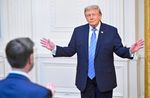
The article posits that the perceived enemy of US democracy is not external, as often claimed, but internal. While the narrative frequently points to Beijing as the source of threats to American democratic institutions, the author suggests the real danger resides within the Oval Office. This perspective challenges the conventional attribution of threats, implying that domestic political actions and rhetoric are more detrimental to US democracy than foreign influence. The piece critiques the tendency to externalize problems, urging a focus on internal dynamics and leadership.
This commentary frames a debate on the locus of threats to US democracy, contrasting external adversaries like Beijing with internal actors, specifically the US presidency. The analysis hinges on the incentive structures of political discourse, where externalizing threats can serve to unify a base or deflect attention from domestic governance challenges. Examining this dynamic through a futurist lens, the increasing interconnectedness of global information flows and domestic political polarization suggests that the distinction between internal and external threats may become increasingly blurred. Understanding the political economy of blame attribution is crucial for fostering resilient democratic institutions capable of addressing complex, multifaceted challenges without succumbing to divisive narratives.
AI-generated to prompt reflection — not editorial opinion, not advice, not a statement of fact. How this works.