US Diplomat Suggests Taiwan Become Drone 'Hornet's Nest' to Deter China
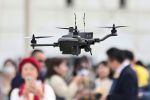
A US diplomat has proposed that Taiwan transform into a "hornet's nest" of drones, a strategy intended to deter potential aggression from China. The United States is Taiwan's primary international supporter and its most significant supplier of weaponry. This initiative aligns with ongoing efforts by the US to bolster Taiwan's defense capabilities in the face of increasing regional tensions. The concept of turning Taiwan into a swarm of drones aims to present a formidable and unpredictable defense against a potential invasion. Such a strategy could leverage advanced drone technology to create a pervasive surveillance and strike capability. The diplomat's suggestion highlights the evolving nature of military deterrence in the modern era, incorporating asymmetrical warfare tactics. The US has consistently affirmed its commitment to Taiwan's security, though the specifics of its involvement in such a scenario remain subject to strategic ambiguity. This proposal underscores the strategic importance of Taiwan in the Indo-Pacific region and the complex geopolitical dynamics at play between the US, China, and Taiwan.
This proposal reflects a strategic shift towards leveraging asymmetrical capabilities for deterrence, aiming to raise the cost of potential aggression for China by making Taiwan a difficult and costly target. The concept of a "hornet's nest" of drones suggests an emphasis on distributed, autonomous systems to overwhelm traditional military advantages. Such a strategy necessitates significant investment in drone technology, training, and robust command-and-control infrastructure, while also considering the potential for escalation and the ethical implications of widespread drone deployment. The effectiveness of this approach will depend on China's perception of risk, the technological sophistication of the drone swarm, and the broader geopolitical context, including the commitment of international partners.
AI-generated to prompt reflection — not editorial opinion, not advice, not a statement of fact. How this works.