US Drone Production Lags Years Behind Ukraine's Wartime Output, Pentagon Official Says
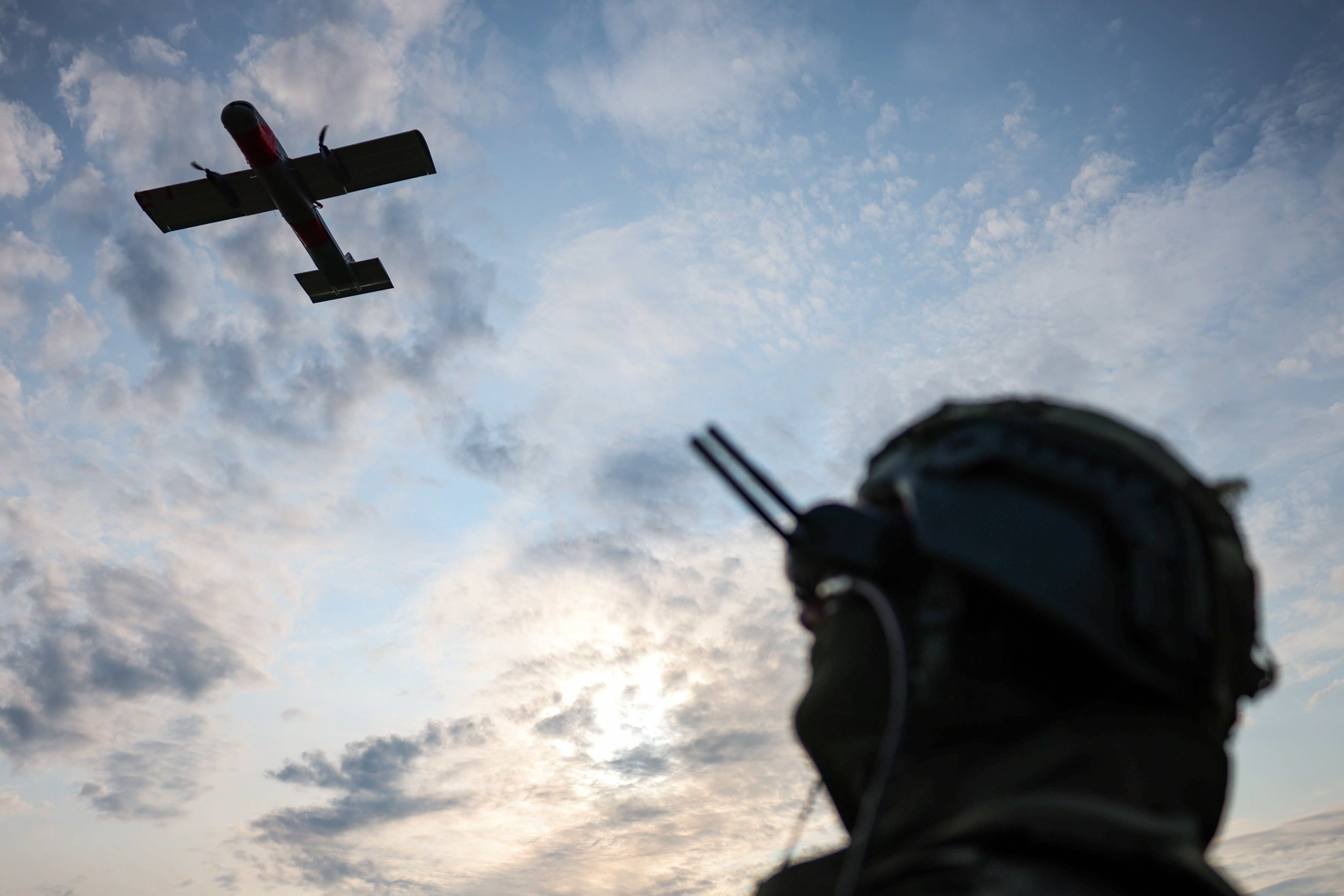
The United States is significantly behind Ukraine in drone production capabilities, according to Travis Metz, a Pentagon official overseeing the development of a domestic drone industry. Metz stated that the U.S. is in the early and most challenging stages of building a national drone industry. He emphasized the difficulty of scaling production from scratch to meet substantial demand, comparing it to the challenge of going "from zero to 200,000." This comes even as the U.S. government is tightening regulations to mandate that drones be manufactured using American-made parts. The official's remarks highlight the substantial gap that exists between the two nations in terms of drone manufacturing capacity, particularly in the context of ongoing conflict. Ukraine has demonstrated a remarkable ability to ramp up its drone production to meet wartime needs, a feat the U.S. is still striving to achieve. The Pentagon's focus on domestic production underscores a strategic imperative to reduce reliance on foreign suppliers and bolster national security interests through indigenous manufacturing capabilities.
The Pentagon official's assessment reveals a critical strategic vulnerability for the United States regarding domestic drone production capacity. The assertion that the U.S. is years behind Ukraine, which has rapidly scaled its manufacturing in response to wartime necessity, points to systemic challenges in U.S. industrial policy and defense procurement. While regulatory efforts to mandate American-made parts are underway, the fundamental difficulty lies in translating policy into tangible, large-scale production capabilities. This situation highlights the inherent trade-offs between national security imperatives, the speed of technological adoption, and the complexities of establishing robust domestic supply chains. The U.S. faces the dual challenge of fostering innovation while simultaneously building the industrial base required to support advanced defense systems, a process that, as this statement indicates, is far from instantaneous and requires sustained, strategic investment beyond immediate regulatory measures.
AI-generated to prompt reflection — not editorial opinion, not advice, not a statement of fact. How this works.