US Homeland Security Secretary Asks Four States to Check Voter Rolls for Non-Citizens
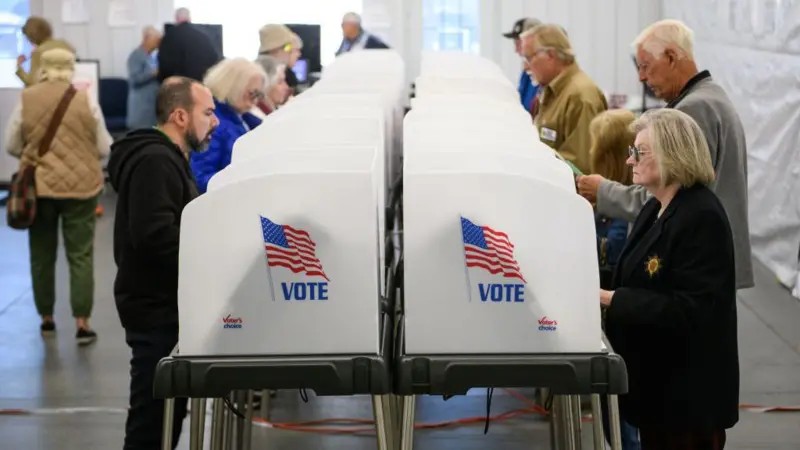
U.S. Secretary of Homeland Security Markwayne Mullin has requested that election officials in California, New Jersey, Nevada, and Pennsylvania verify their voter lists for individuals who are not U.S. citizens. This action follows President Donald Trump's repeated, unsubstantiated claims of election interference in past elections. Mullin stated in a release that preliminary analyses of voter records from these states were sent to their respective Secretaries of State. The Department of Homeland Security (DHS) cited potential violations without providing corroborating evidence. Mullin has given the Secretaries of State two weeks to respond and confirm their cooperation with the DHS on election security. He warned that officials failing to take requested measures could face fines, penalties, or even imprisonment, depending on the case's severity. Nevada's top election official, Secretary of State Francisco Aguilar, rejected Mullin's claims, calling the numbers highly speculative and unproven. Aguilar asserted that Nevada has consistently provided the DHS with detailed information on its voter qualification processes and fraud prevention measures. California, New Jersey, and Pennsylvania did not immediately respond to requests for comment. Mullin claimed on X that the DHS identified over 250,000 potential non-citizens illegally registered to vote across the four states and urged support for the SAVE America Act, a bill backed by Trump. He reiterated this figure to reporters without specifying the criteria used by the DHS. Trump has been advocating for stricter voter ID and citizenship requirements, despite established findings that election fraud is rare in the U.S. He has also intensified efforts to make election security a central issue, recently alleging Chinese interference in the 2020 presidential election, a claim unsupported by U.S. intelligence assessments. Numerous court cases and recounts have found no evidence of widespread fraud in the 2020 election. Mullin also raised concerns about foreign adversaries potentially accessing and altering voting machines and voter registration, though he presented no evidence. There is no known record of foreign nations directly manipulating U.S. elections. The Cybersecurity and Infrastructure Security Agency (CISA) is expected to release an updated election infrastructure plan within 30 days.
The request from the U.S. Department of Homeland Security to audit voter rolls in four states, citing potential non-citizen voting, occurs within a broader context of heightened political rhetoric surrounding election integrity. While the stated goal is to ensure election security, the absence of presented evidence and the timing, following unsubstantiated claims by former President Trump, raise questions about the motivations and potential impact of such actions. The DHS's threat of penalties for non-compliance could be interpreted as an attempt to exert federal influence over state-administered election processes. This situation highlights the ongoing tension between federal oversight and state autonomy in election administration, particularly as the next election cycle approaches. Future developments will likely depend on the transparency of the DHS's methodology, the responses from the state officials, and the broader political landscape's influence on public perception of election security.
AI-generated to prompt reflection — not editorial opinion, not advice, not a statement of fact. How this works.