US House Approves $1.15 Trillion Defense Budget, Expanding Israel Cooperation
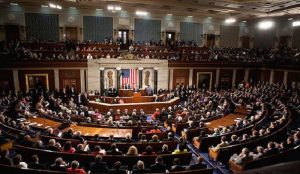
The U.S. House of Representatives has narrowly passed a military spending package totaling $1.15 trillion. The National Defense Authorization Act (NDAA) secured approval with a vote of 216, primarily driven by Republican support. Democrats largely opposed the bill, citing concerns over its substantial cost. Additionally, a significant point of contention was the expanded cooperation between the United States and Israel in the realm of military technology. This provision, which aims to deepen collaboration on defense innovation and capabilities, faced criticism for its potential implications and financial commitment. The legislation now moves forward, reflecting a significant allocation of resources towards national defense and a strategic deepening of ties with a key international partner.
The passage of the NDAA signifies a substantial commitment to national defense spending, reflecting established priorities in U.S. foreign policy and security strategy. The expansion of military technology cooperation with Israel, while presented as a strategic partnership, warrants examination through the lens of long-term geopolitical stability and the equitable distribution of advanced defense capabilities. Future legislative considerations might involve assessing the efficacy of such collaborations in achieving stated security objectives while also considering potential impacts on regional power dynamics and the global arms market. Evaluating the allocation of such significant financial resources against evolving global threats and the technological landscape will be crucial for ensuring strategic foresight and fiscal responsibility in the coming decade.
AI-generated to prompt reflection — not editorial opinion, not advice, not a statement of fact. How this works.