US House Approves $480 Billion War Funding and Trump's Voter Restriction Bill
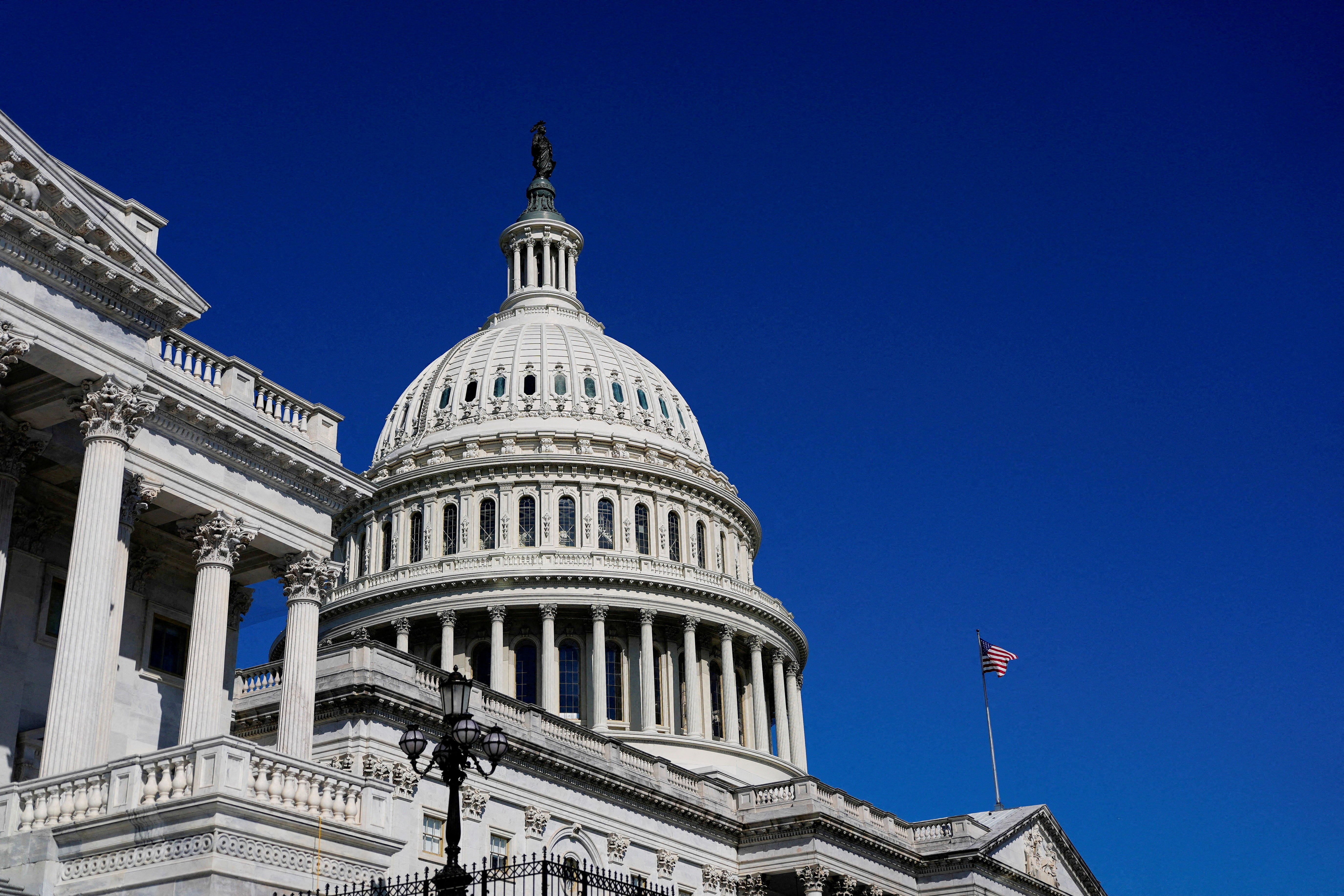
The U.S. House of Representatives has approved a $480 billion budget proposal, exclusively supported by Republicans and President Donald Trump's party. This measure now moves to the Senate, where its passage is not guaranteed. The bill represents an attempt, with low chances of success, to fund operations against Iran and advance other White House priorities, despite opposition from Democrats and some dissenting Republicans. Notably, the package includes Trump's "Save America Act," aimed at restricting access to voting, a measure prioritized by the President ahead of the November midterm elections. Republicans in the House were divided, with fiscal conservatives expressing concern over the lack of offsetting budget cuts. However, House Speaker Mike Johnson proceeded, viewing this standalone initiative as the best opportunity to advance Trump's agenda in a divided Congress. The vote passed narrowly, 216-214, with two Republicans and an independent joining Democrats in opposition. Democrats argued the funds should be allocated domestically, particularly for initiatives to lower costs for Americans. They criticized the Republican plan to spend billions on the conflict with Iran, questioning the allocation of taxpayer money for a war that lacks clear congressional authorization and is met with public disapproval. This budget battle coincides with President Trump attending a ceremony for four U.S. service members killed in the Middle East, a development that could further erode public support for the already unpopular war. Defense Secretary Pete Hegseth reportedly informed senators that the Pentagon is facing resource shortages, despite a substantial $150 billion allocation last year. The approved package allocates $60 billion to the Pentagon, $13 billion for national security, $10 billion for electoral law changes aligned with the "Save America Act" (including citizenship verification requirements), and $12 billion for farmers impacted by Trump's tariffs.
The House's passage of a Republican-only budget package, funding military operations and advancing a key Trump administration priority on voting access, highlights significant political polarization. The narrow vote margin and internal party divisions underscore the challenges of bipartisan consensus on national security spending and electoral reforms. The inclusion of the "Save America Act" suggests a strategic effort to leverage defense appropriations for domestic political objectives, potentially creating tension between national security needs and electoral process integrity. The debate over war funding, particularly concerning Iran, reflects an ongoing struggle between executive authority and congressional oversight, complicated by public opinion and recent military casualties. This situation presents a complex interplay of geopolitical commitments, fiscal responsibility, and domestic electoral considerations, with future legislative outcomes likely dependent on Senate dynamics and evolving public sentiment.
AI-generated to prompt reflection — not editorial opinion, not advice, not a statement of fact. How this works.