US House Rejects Amendment to Halt Aid to Israel Amidst Democratic Division
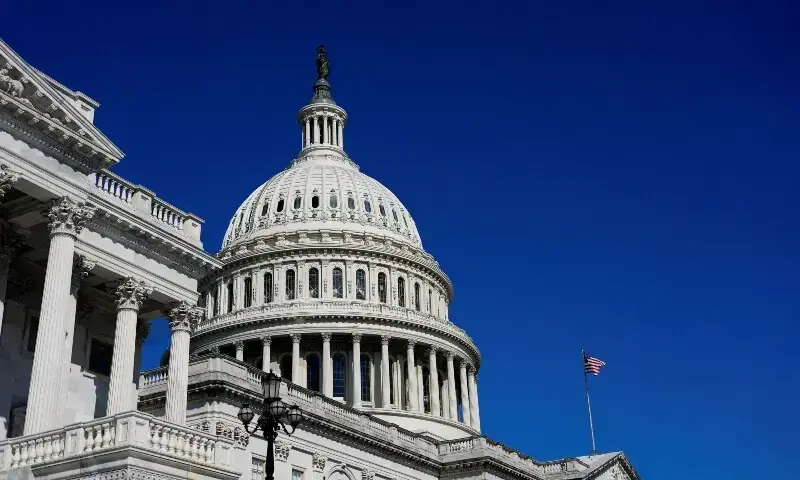
The U.S. House of Representatives voted 314 to 104 to defeat an amendment that sought to cut off military aid to Israel. This measure, proposed by Republican Representative Thomas Massie of Kentucky, was attached to a State Department spending bill. The vote highlighted a significant division within the Democratic party, with 103 Democrats joining one Republican in supporting the amendment, a stark contrast to previous unanimous support for Israel-related legislation. Progressive Democrats are increasingly campaigning against U.S. aid to Israel, particularly in light of its military actions in Gaza. Representative Massie, who generally opposes all foreign aid, cited the substantial civilian casualties in Gaza, stating that over 70,000 casualties have occurred, and he did not want the U.S. to be associated with it. The amendment aimed to block the $3.3 billion in annual security assistance provided to Israel under a 2016 Memorandum of Understanding (MoU), which is set to expire in 2028. The Gaza health ministry reports that Israel's offensive, initiated in October 2023, has resulted in over 73,000 Palestinian deaths, leaving much of the enclave in ruins and displacing nearly its entire population. Although the amendment's passage would have been largely symbolic due to the certainty of a presidential veto and the need for Senate approval, it signifies a notable shift in political discourse. This growing dissent has manifested in primary challenges, with some candidates gaining traction by opposing Israel's actions in Gaza. Party leadership is also divided, with House Democratic Leader Hakeem Jeffries opposing the amendment for being "too broad," while Representative Katherine Clark expressed support, arguing against providing unconditional military aid. The ongoing debate is expected to continue, with future electoral contests, such as the August 4th Michigan primaries, likely to further test the evolving stance on U.S.-Israel relations.
The recent U.S. House vote on cutting aid to Israel reveals a deepening schism within the Democratic party, driven by evolving public sentiment and the humanitarian crisis in Gaza. This internal division challenges long-standing bipartisan consensus on foreign policy, suggesting a potential recalibration of U.S. strategic interests and values in the Middle East. As electoral cycles intensify, candidates are increasingly leveraging foreign policy stances to mobilize voter bases, particularly among progressive constituents. The situation underscores a broader trend where domestic political considerations and international humanitarian concerns are becoming more intertwined, forcing policymakers to navigate complex trade-offs between geopolitical alliances and ethical imperatives. Future legislative actions and electoral outcomes will likely reflect this ongoing tension, potentially reshaping the trajectory of U.S. foreign aid policies and diplomatic engagements in the coming decade.
AI-generated to prompt reflection — not editorial opinion, not advice, not a statement of fact. How this works.