US Immigration Crackdown Intensifies Amid World Cup Distraction
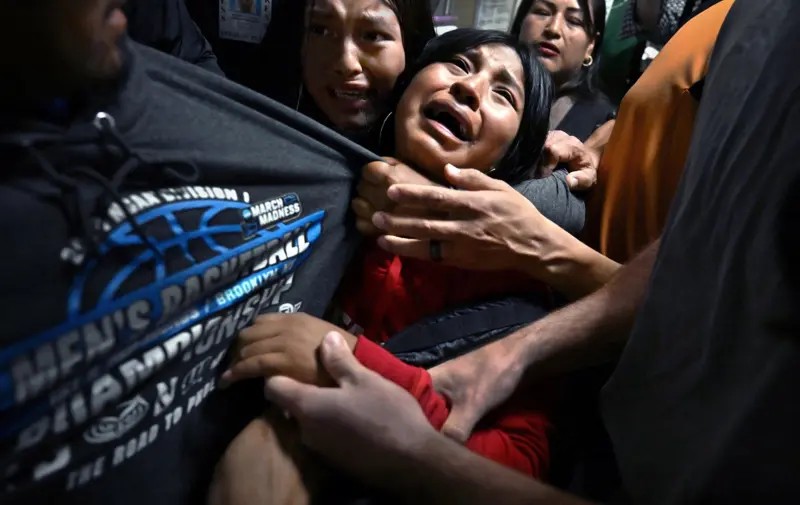
U.S. Immigration and Customs Enforcement (ICE) agents have significantly increased their apprehension of immigrants across the United States, coinciding with the 2026 World Cup hosted by the U.S., Canada, and Mexico. In a five-day period during the last week of June, ICE agents detained approximately 10,000 individuals, a rate described as the highest proportionally since the immigration crackdowns under the Trump administration. This surge in detentions occurred largely unnoticed, despite the global spotlight on the U.S. due to the World Cup. While initial concerns suggested ICE operations might target fans near stadiums, the agency shifted its tactics. The Trump administration's strategy involved conducting more dispersed and discreet operations away from major host cities to meet detention quotas without impacting the sporting event. This approach was confirmed by government officials and Republican Congressman Michael McCaul, Chairman of the House Homeland Security Committee, who stated ICE's role was not to deport large numbers of people during the games. The recent change in leadership at the Department of Homeland Security, with Markwayne Mullin succeeding Kristi Noem, may also have contributed to a less public approach to immigration enforcement. Mullin denied explicit orders to avoid media attention during the World Cup but confirmed instructions to focus operations away from stadiums, prioritizing game security. Despite these efforts at discretion, two high-profile fatal shootings involving ICE agents in late June brought the agency's actions back into the public eye. One incident occurred in Houston, Texas, where an agent fatally shot a Mexican driver during a stop, and another in Biddeford, Maine, resulted in the death of a Colombian citizen by an immigration agent. Following these events, ICE agents nationwide were reportedly instructed to suspend vehicle stops, according to sources cited by Reuters and CNN International. Democratic Congresswoman Sydney Kamlager-Dove criticized these killings, highlighting a pattern of hostile treatment towards some delegations and athletes during the World Cup's commencement.
The intensified immigration enforcement operations by ICE during the 2026 World Cup, conducted discreetly away from major venues, highlight a strategic balancing act between domestic policy objectives and international public relations. The administration's approach suggests a calculated effort to advance its immigration agenda while minimizing negative global perception during a high-profile international event. This strategy raises questions about transparency in law enforcement and the potential for significant enforcement actions to occur without public scrutiny. The fatal incidents involving ICE agents, despite the emphasis on discretion, underscore the inherent risks in such operations and their potential to generate controversy regardless of the operational context. Moving forward, the tension between robust enforcement and maintaining a positive international image will likely continue to shape immigration policy implementation, particularly in the context of major global events.
AI-generated to prompt reflection — not editorial opinion, not advice, not a statement of fact. How this works.