US Imposes 25% Tariffs on Brazilian Goods, Citing Unfair Practices
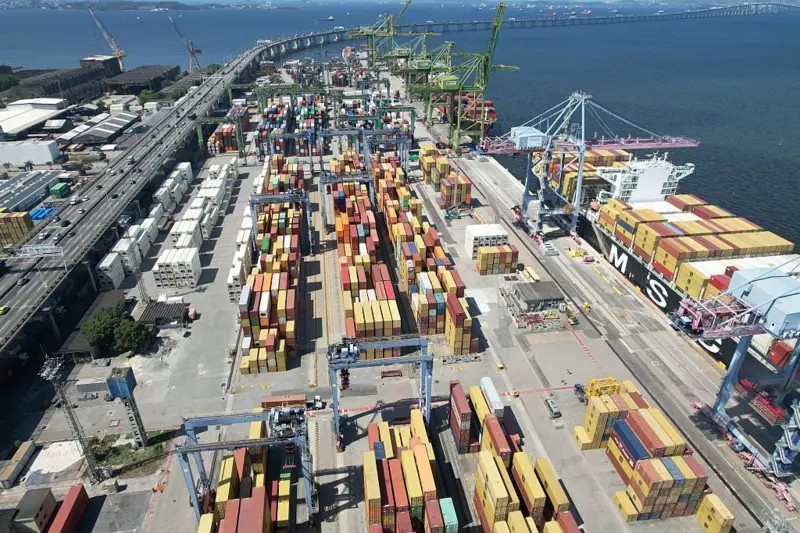
The United States government has officially announced a 25% tariff on a wide range of Brazilian products, effective July 22. This decision stems from an investigation by the U.S. Trade Representative's Office into alleged "unfair practices" by the Brazilian economy. The final report cited issues including deforestation, intellectual property protection, treatment of big tech companies, and even Brazil's PIX payment system. U.S. Secretary of State Marco Rubio criticized President Lula, stating the Brazilian government lacked "good faith" in negotiations. Brazil's Planalto Palace deemed the measure a "regrettable" milestone in bilateral relations and threatened to invoke the Law of Reciprocity. The podcast "O Assunto" features interviews with experts on geopolitics and international relations. Ambassador Roberto Azevêdo, former Director-General of the World Trade Organization, discussed the behind-the-scenes negotiations between Brazilian and American officials and analyzed international trade dynamics. Bruna Santos, Director of the Brazil Program at the Inter-American Dialogue, commented on the deterioration of diplomatic relations between Brazil and the U.S. Brazilian officials, including Vice President Alckmin and Foreign Minister Mauro Vieira, have contested the U.S. allegations, calling the tariffs "unjust," "unfounded," and politically motivated. The tariffs are expected to impact approximately 50 of Brazil's top export products to the U.S., with global media outlets framing the move as a "commercial blow" on the eve of an election campaign.
The imposition of U.S. tariffs on Brazilian goods, framed by the U.S. as a response to unfair practices and by Brazil as politically motivated, highlights the complex interplay between trade policy, domestic politics, and international relations. The stated justifications, ranging from environmental concerns to intellectual property rights and digital economy policies, suggest a broadening scope for trade disputes beyond traditional economic factors. This situation underscores the increasing leverage of powerful nations in trade negotiations, where adherence to international norms can be challenged by unilateral actions driven by perceived national interests or political expediency. The Brazilian government's reaction, invoking reciprocity, signals a potential escalation in trade friction. Looking ahead, such disputes may become more frequent as countries navigate evolving global economic landscapes, including the digital transition and climate change imperatives, potentially leading to a re-evaluation of established trade frameworks and dispute resolution mechanisms.
AI-generated to prompt reflection — not editorial opinion, not advice, not a statement of fact. How this works.