US Intervenes to Boost Japan's Currency, Prompting Questions About Motives
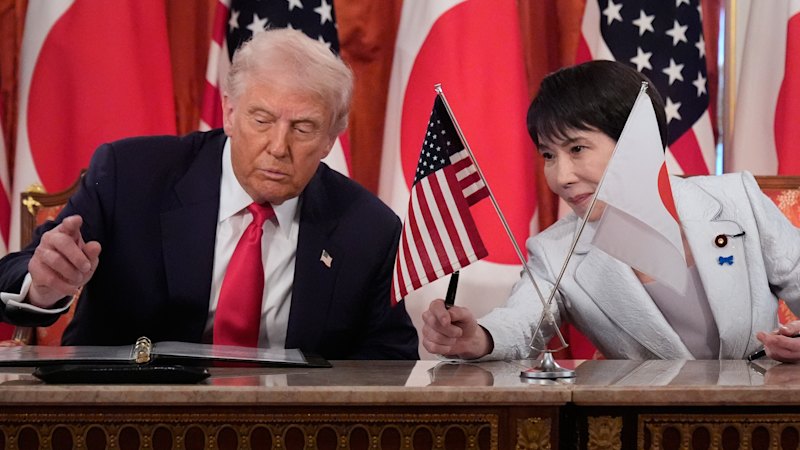
Former US President Donald Trump recently commented on the United States' intervention to support Japan's currency. Trump's remarks, described as tactless, referenced the attack on Pearl Harbor in the context of the US move to bolster the Japanese yen. The article highlights that the underlying reasons for this American intervention are of significant interest. The intervention aims to address the depreciation of the Japanese yen against the US dollar. This currency fluctuation has raised concerns about its impact on global markets and trade dynamics. The specific motivations behind the US decision to intervene are being closely examined by analysts and policymakers. The timing and nature of the intervention suggest potential strategic economic or geopolitical considerations at play. Further details on the exact mechanisms and objectives of the US action are anticipated.
The US intervention to support the Japanese yen, irrespective of the specific administration or political figures involved, reflects a complex interplay of economic and geopolitical incentives. Such actions often aim to stabilize currency markets, prevent excessive volatility that could harm trade relationships, or address perceived imbalances. The invocation of historical events, while potentially inflammatory, may be an attempt to frame the intervention within a narrative of alliance or mutual interest. Examining the underlying economic conditions, such as inflation differentials, interest rate policies, and capital flows, is crucial to understanding the sustainability and broader implications of this currency support. The long-term effects will likely depend on whether the intervention addresses the root causes of yen depreciation or merely provides a temporary reprieve, potentially influencing future international monetary policy coordination.
AI-generated to prompt reflection — not editorial opinion, not advice, not a statement of fact. How this works.
