US-Iran Conflict Escalates, Spreading Beyond Strait of Hormuz
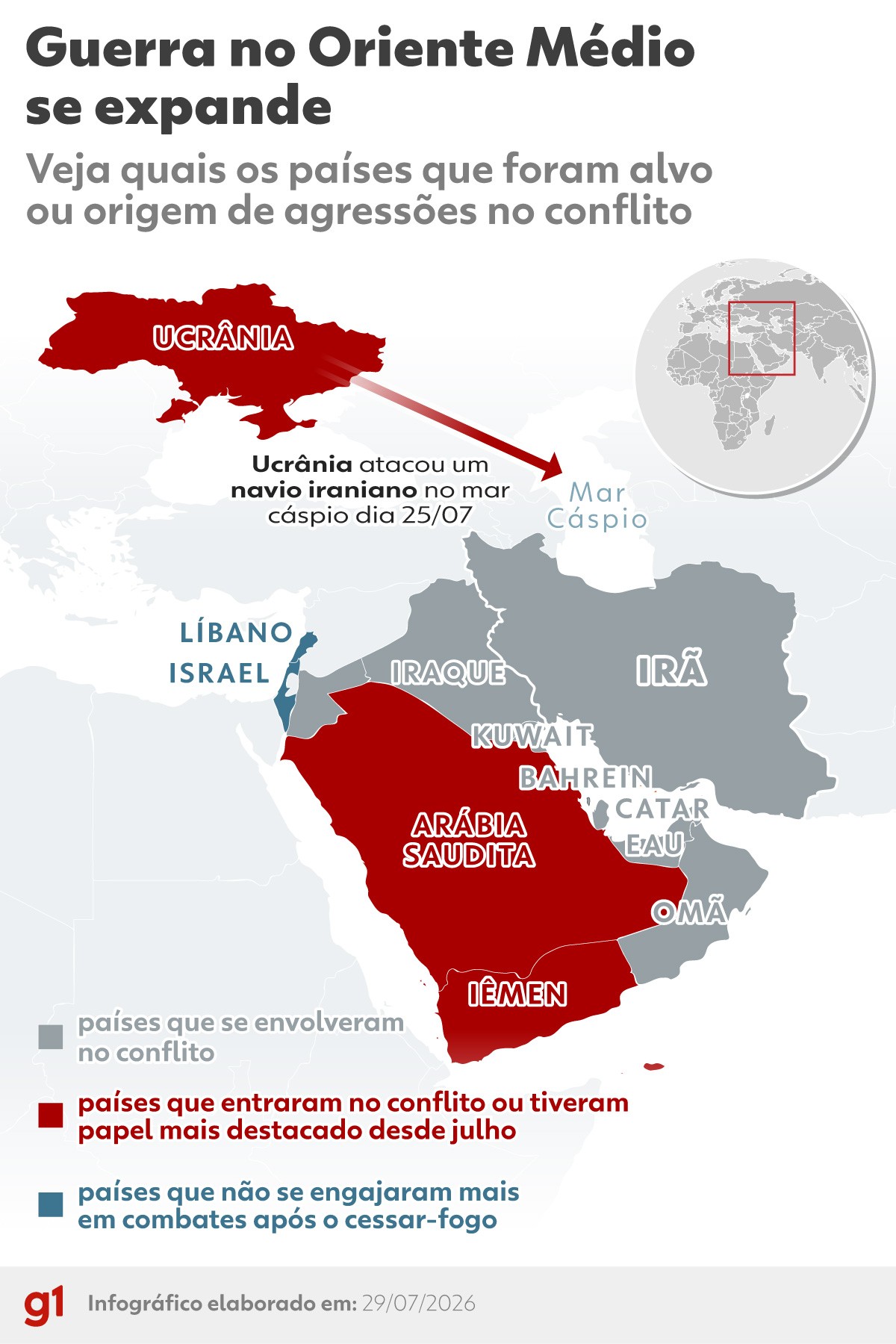
The conflict between the United States and Iran has intensified and expanded beyond the Strait of Hormuz, with new fronts opening in the Caspian Sea and the Bab-el-Mandeb Strait. Initially, a fragile peace agreement in early July seemed to de-escalate tensions, but hostilities resumed on July 7th after Iran targeted ships that disregarded its orders in the Strait of Hormuz. The US responded with attacks on Iranian targets, leading to near-daily exchanges.
Ukraine has entered the fray by attacking an Iranian commercial ship in the Caspian Sea, signaling its involvement due to Russia's support for Iran. Iran's foreign minister stated this action would not go unanswered, raising concerns about a unified conflict. In parallel, Yemen's Houthi rebels, allied with Iran, declared a maritime embargo on Saudi Arabia in the Bab-el-Mandeb Strait, a key entry point to the Red Sea. This retaliatory move follows Saudi Arabia's naval blockade of Iran and escalated existing tensions between the two regional rivals. The Saudi-Houthi conflict, dormant since 2022, reignited with missile and drone attacks targeting oil facilities and ports.
Meanwhile, Israel and Lebanon have adhered to a ceasefire agreement brokered by the US on June 26th, though Hezbollah was not involved. Israel maintains a partial military occupation in southern Lebanon, citing security concerns. The conflict has displaced over a million people internally in Lebanon. Iran has retaliated against US attacks by targeting American bases in the Middle East, including a lethal strike in Jordan on July 17th that killed three US soldiers. In response, the US and Saudi Arabia launched attacks against pro-Iranian Shia militia bases in Iraq.
The escalating US-Iran conflict demonstrates how regional proxy dynamics can rapidly destabilize international maritime trade routes and create complex, multi-front confrontations. The involvement of actors like Ukraine and Houthi rebels highlights the interconnectedness of geopolitical theaters, where support for one party can draw others into direct or indirect conflict. This expansion beyond traditional chokepoints like Hormuz suggests a strategic shift, potentially aimed at diversifying pressure points and complicating international response efforts. The reliance on non-state actors and the targeting of critical infrastructure, such as oil facilities, underscore the evolving nature of modern warfare, where economic disruption is a key objective. Future de-escalation will likely require addressing the underlying grievances and security concerns of all involved parties, rather than solely focusing on military responses.
AI-generated to prompt reflection — not editorial opinion, not advice, not a statement of fact. How this works.