US-Iran De-escalation: Who Suffered Most in the Middle East?
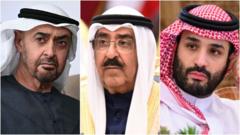
A memorandum of understanding between the United States and Iran has temporarily reduced military tensions in the Middle East. This development prompts a critical question: which regional actors have incurred the most significant losses amidst this prolonged conflict?
The recent de-escalation suggests a shift in the dynamics of the US-Iran confrontation. While the immediate military threat may have subsided, the underlying political and economic ramifications are still being assessed. The agreement, though not explicitly detailed, implies a period of reduced hostilities, allowing for a re-evaluation of the strategic landscape.
This pause in direct confrontation forces a reckoning of the broader consequences for the Arab nations. Their involvement and positioning within the US-Iran rivalry have been complex, often caught between competing interests and alliances. The current situation necessitates an analysis of how these Arab states have been impacted, both economically and politically, by the heightened tensions and their subsequent abatement.
The recent memorandum of understanding between the US and Iran signifies a potential de-escalation, shifting the focus from immediate military confrontation to the longer-term strategic and economic consequences for regional actors. The core incentive for such agreements often lies in mitigating the immense financial and human costs associated with prolonged conflict, which can strain national budgets and destabilize markets. For Arab nations, their strategic positioning has been significantly influenced by this rivalry, creating complex geopolitical trade-offs. This period of reduced tension offers an opportunity to reassess these alliances and dependencies, potentially leading to a recalibration of regional security architectures and economic policies. The enduring challenge will be to address the systemic issues that fuel such conflicts, rather than merely managing their immediate symptoms, ensuring a more stable and prosperous future in the evolving geopolitical landscape.
AI-generated to prompt reflection — not editorial opinion, not advice, not a statement of fact. How this works.