US-Iran Tensions Escalate: Peace Talks Future Uncertain Amidst Military Strikes
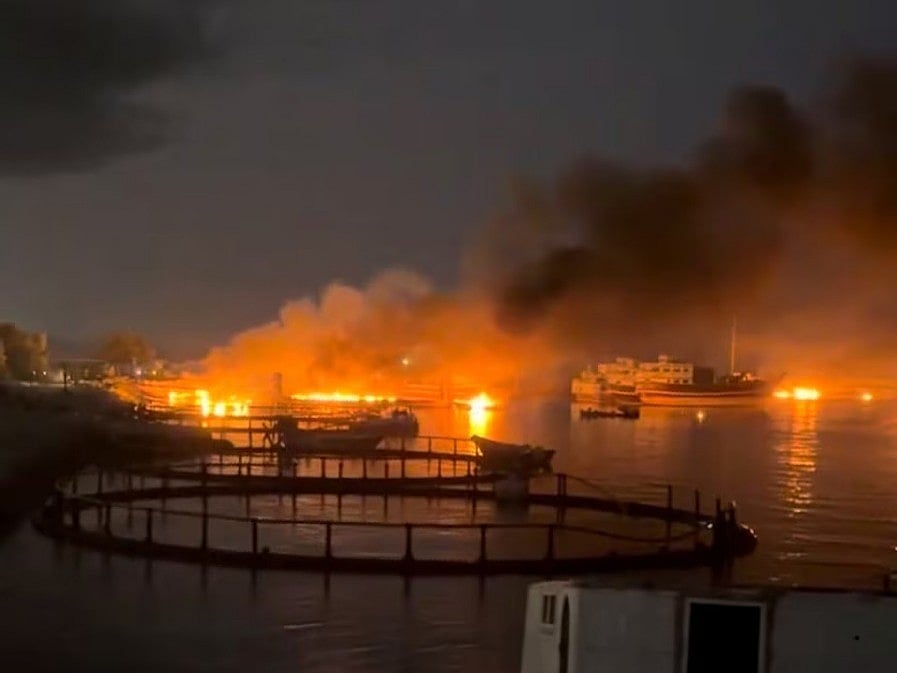
Tensions between the United States and Iran have intensified following a series of US strikes on Iran early Wednesday morning, raising fears of renewed conflict in the Middle East. The US claims these retaliatory strikes were a response to Tehran's alleged attacks on commercial vessels in the Strait of Hormuz. The immediate aftermath of these strikes has cast a shadow of uncertainty over ongoing peace negotiations between the two nations.
Following the attacks, US President Donald Trump stated at a NATO summit in Ankara, Turkey, that a memorandum of understanding with Iran was effectively over, though he did not completely close the door to further dialogue. His remarks conveyed clear disappointment, and he strongly criticized Iran's leadership. This escalation has also impacted the global economy, with Brent crude oil prices rising to $78 per barrel, European stock markets declining, and the dollar strengthening, creating widespread market uncertainty.
The strikes occurred while peace talks were underway, following the earlier joint US-Israeli operation in February that killed Iran's Supreme Leader Ayatollah Ali Khamenei. This latest action represents the most significant blow since an initial ceasefire agreement in April. Iran's Islamic Revolutionary Guard Corps claims to have retaliated with strikes on US bases in Bahrain and Kuwait, where sirens were reportedly heard. The US has also reported the death of a US service member in a drone attack.
The Strait of Hormuz, a critical global trade route, is at the center of this conflict. US Central Command stated it struck over 80 targets in Iran, including air defense systems, command structures, and missile capabilities, and claimed to have destroyed over 60 small Iranian naval vessels. The US accuses Iran of attacking three commercial ships—one flagged by the Marshall Islands, one from Saudi Arabia, and one from Liberia. Iran disputes this, claiming the vessels violated safe passage routes and ignored Iranian directives for navigation in the strait.
In response to the alleged attacks, the US has reimposed oil sanctions on Iran, which had been temporarily eased to mitigate fuel shortages during a period of heightened tension. The sanctions, previously relaxed for 60 days under a June agreement allowing Iran to sell oil, have been tightened before the expiration of that period. These sanctions pose a significant challenge to Iran's economy, heavily reliant on oil and petrochemical exports, thus undermining a key foundation of the peace talks.
Iran's Foreign Ministry condemned the US actions as a severe violation of international law and an attack on state sovereignty, asserting its right to self-defense under the UN Charter. Iran's Parliament Speaker Mohammad Bagher Ghalibaf called the US move a serious breach of the understanding memorandum, stating that pressure tactics would yield no results. Iranian Foreign Minister Abbas Araghchi indicated that the attacks had rendered the framework for ending the war effectively defunct.
International reactions have been swift. NATO Secretary General Jens Stoltenberg supported the US action as necessary given Iran's conduct. The Secretary General of the Gulf Cooperation Council, Jasem Albudaiwi, condemned Iran's attacks. Kuwait, Qatar, Oman, the UAE, and Egypt have all expressed concern about regional stability and called for restraint.
The future of peace negotiations remains uncertain, with President Trump's comments signaling a loss of confidence. However, the door to dialogue has not been entirely shut. The limited scope of the US strikes suggests a desire to avoid full-scale war, though some speculate Iran may be intentionally escalating tensions to gain leverage. Both sides may be seeking time for further negotiations before the August deadline. The situation stands at a critical juncture where a single misstep could lead to a larger conflict, but the hope remains that both parties will ultimately pursue a resolution over further confrontation.
The recent US-Iran military actions and subsequent economic repercussions highlight the complex interplay between geopolitical tensions and global markets. The imposition and lifting of sanctions, particularly on oil exports, represent a significant leverage point in international diplomacy, directly impacting Iran's economic stability and its capacity for engagement in peace talks. The strategic importance of the Strait of Hormuz as a chokepoint for global trade means that any disruption carries substantial economic consequences, influencing global energy prices and investor confidence. Future diplomatic efforts will likely navigate the inherent contradiction between national security interests, economic statecraft, and the pursuit of regional stability. The events underscore the need for robust de-escalation mechanisms and transparent communication channels to prevent miscalculation and manage the volatile dynamics of international relations in an era increasingly shaped by resource competition and technological advancements.
AI-generated to prompt reflection — not editorial opinion, not advice, not a statement of fact. How this works.