US-Iran Tensions Flare: Escalation-De-escalation Cycle Continues
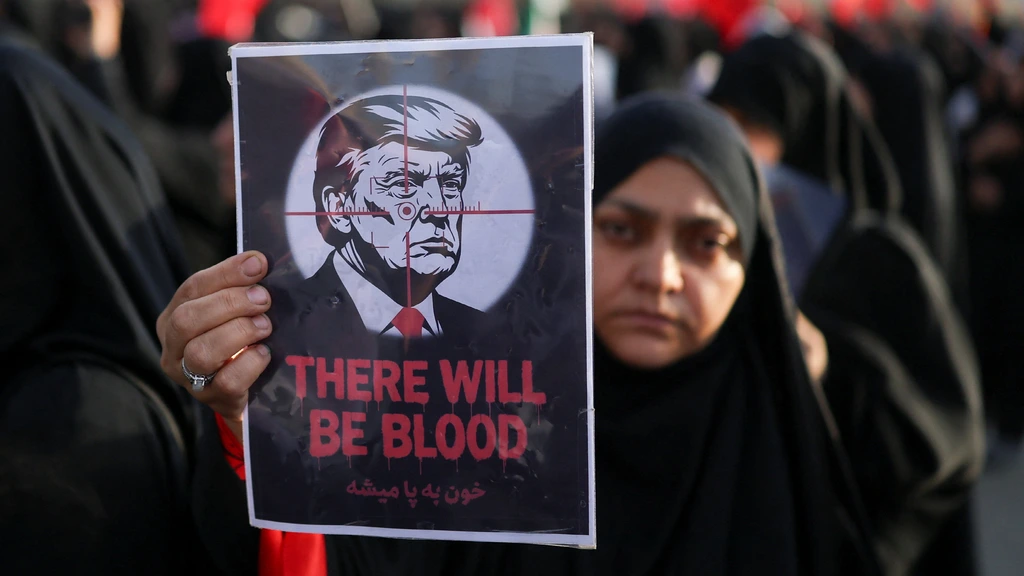
The fragile truce between the United States and Iran has reportedly collapsed, with the US launching over 170 airstrikes on Iranian targets. In response, Iran fired missiles and drones at neighboring countries hosting US military personnel. President Trump has declared the ceasefire over, calling further negotiations a "waste of time" and labeling the Iranian regime "scum" and "sick people." Tehran has not officially confirmed the end of the truce, with moderate officials advocating for dialogue while hardliners adopt a more combative stance.
Middle East expert Kawa Hassan of the Stimson Center described the situation as a recurring pattern of escalation and de-escalation, noting that too many red lines have been crossed for agreements to hold much weight. This cycle of conflict has led to significant chaos in the region. The recent hostilities follow attacks on three commercial ships in the Strait of Hormuz on Monday and Tuesday, which the US attributed to Iranian forces using missiles and drones. The US responded with its heaviest bombardment since the three-week-old ceasefire began.
Iranian affairs specialist Ali Vaez of the International Crisis Group suggested that Iran viewed its actions as a response to alleged US violations of a preliminary agreement, a Memorandum of Understanding (MOU). The MOU's ambiguity allows for differing interpretations, with Iran reportedly fearing the US would use the truce to diminish its influence in the Strait of Hormuz. Vaez posits that Iran attacked the ships to maintain leverage before a final agreement. Babak Rezaeedaryakenari from Leiden University raised concerns about internal coordination within Iran, suggesting that elements of the Revolutionary Guard might have acted without full political leadership approval, a possibility amplified by the fragmentation of Iran's governance following the death of Ayatollah Khamenei.
All three experts agree that neither Washington nor Tehran benefits from a full-scale war, anticipating continued but contained escalations. Hassan believes further negotiations are unavoidable, despite the low probability of definitive agreement on key issues, stating the MOU is currently the only alternative. Rezaeedaryakenari noted the US's increasingly forceful responses, especially after civilian vessels were targeted, and did not rule out a potential US invasion of Iran post-November midterm elections. Vaez anticipates a prolonged period of "gray area" with the MOU being implemented inconsistently, while acknowledging the ever-present risk of renewed conflict due to Trump's perceived impatience.
The recurring cycle of escalation and de-escalation between the US and Iran, particularly concerning maritime security in the Strait of Hormuz, highlights the challenges of managing asymmetric geopolitical rivalries through ambiguous interim agreements. The internal fragmentation within Iran's political and military structures may introduce unpredictable elements into its foreign policy, potentially leading to actions not fully sanctioned by the highest leadership. For the US, the imperative to project strength and deter aggression, especially after perceived provocations against commercial shipping, clashes with the strategic goal of avoiding wider conflict. Future diplomatic frameworks will need to address the inherent contradictions in the current MOU, which allows for divergent interpretations and fuels mistrust, to prevent a slide into more direct confrontation. The long-term stability of the region hinges on establishing clearer communication channels and mutually understood boundaries, rather than relying on a pattern of reactive measures.
AI-generated to prompt reflection — not editorial opinion, not advice, not a statement of fact. How this works.