US-Iran Tensions Flare Over Strait of Hormuz Governance Post-MoU
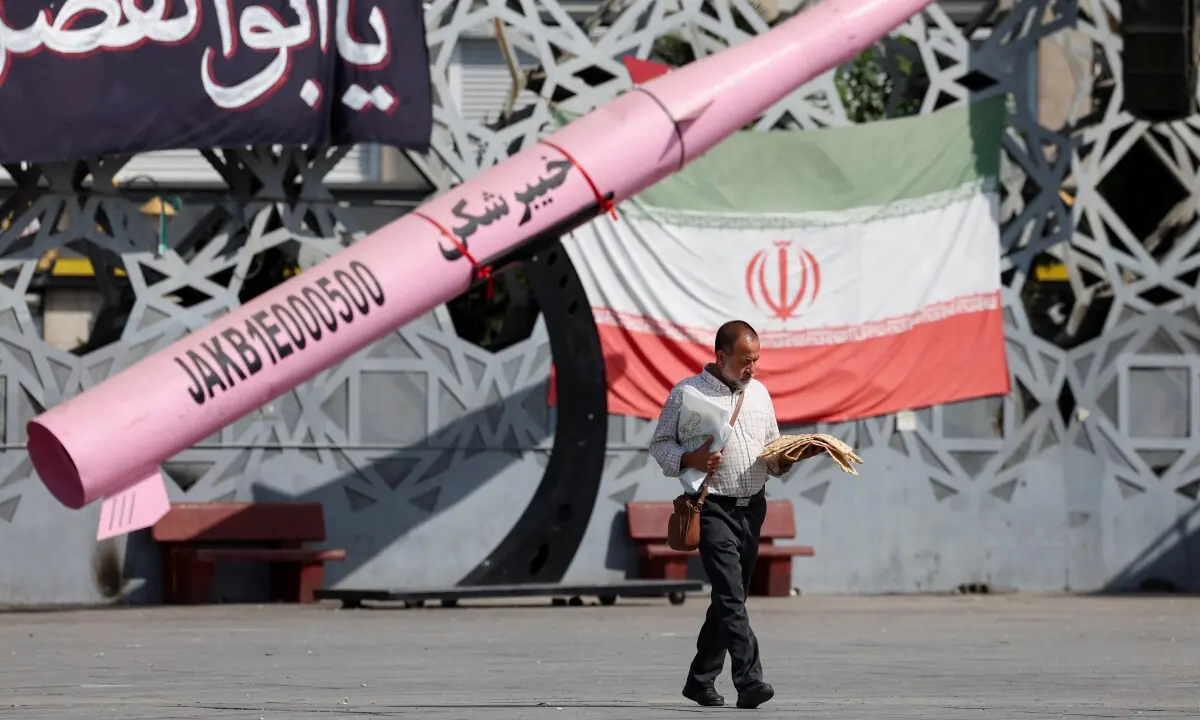
Following a recent US-Iran memorandum of understanding (MoU) that temporarily halted a dangerous confrontation, renewed hostilities have erupted, characterized by missile exchanges and disruptions to commercial shipping in the Strait of Hormuz. The US conducted precision strikes on Iranian military and petrochemical infrastructure in southern Iran, targeting facilities in Khuzestan province and near Bandar Abbas, Qeshm Island, and Bushehr. These strikes aimed to degrade Iran's air defense, missile, and coastal capabilities, with open-source imagery confirming damage to the Omidiyeh airbase and a building at the Bushehr nuclear complex. In response, Iran launched ballistic missiles at facilities linked to US military presence in Bahrain, Kuwait, and Jordan, while also continuing to interfere with commercial shipping in the Strait of Hormuz. This has significantly reduced vessel traffic, with daily transits dropping to single digits. The current escalation highlights the unresolved dispute over the governance of the Strait of Hormuz, a critical maritime gateway for energy exports. The MoU's fifth clause, which committed Iran to ensuring safe passage for 60 days and engaging in dialogue with Oman and other Gulf states to define future administration in line with international law and sovereign rights, has become the central point of contention. The US interprets "international law" as upholding freedom of navigation, while Iran emphasizes the "sovereign rights of coastal states," arguing for greater oversight of maritime movement due to security concerns. Both sides had anticipated the MoU's temporary nature and used the intervening weeks to prepare for renewed conflict by restoring infrastructure, replenishing stocks, and rotating forces. Despite the US's superior precision strike capability, Iran's geographical advantages and asymmetric maritime tactics, including drones and missile batteries, allow it to disrupt shipping and impose costs. However, Iran cannot unilaterally establish a stable maritime arrangement, and the continued operation of the Strait is vital for its own economic recovery. This has resulted in an uneasy equilibrium where neither side can impose its preferred outcome militarily, leading to prolonged confrontation and significant commercial consequences, including reduced transits, increased insurance costs, and oil price volatility due to geopolitical uncertainty.
The recent escalation between the US and Iran over the Strait of Hormuz, occurring shortly after a memorandum of understanding, underscores the persistent challenge of balancing international maritime law with the sovereign rights of littoral states. The conflict's recurrence suggests that the MoU served as a temporary de-escalation rather than a resolution of fundamental strategic disagreements. The core issue revolves around competing interpretations of governance for a vital global trade route, reflecting a broader geopolitical contest for influence and control in the region. The current dynamic, characterized by an equilibrium of disruptive capabilities rather than decisive military advantage, highlights the inherent risks of asymmetric warfare and the limitations of conventional power projection in geographically constrained environments. Future stability will likely depend on finding a mutually acceptable framework for the Strait's governance that addresses both freedom of navigation and the security concerns of regional actors, a complex task given the deep-seated mistrust and divergent strategic objectives.
AI-generated to prompt reflection — not editorial opinion, not advice, not a statement of fact. How this works.