US-Japan Yen Support: A Sign of Friendship or Separate Interests?
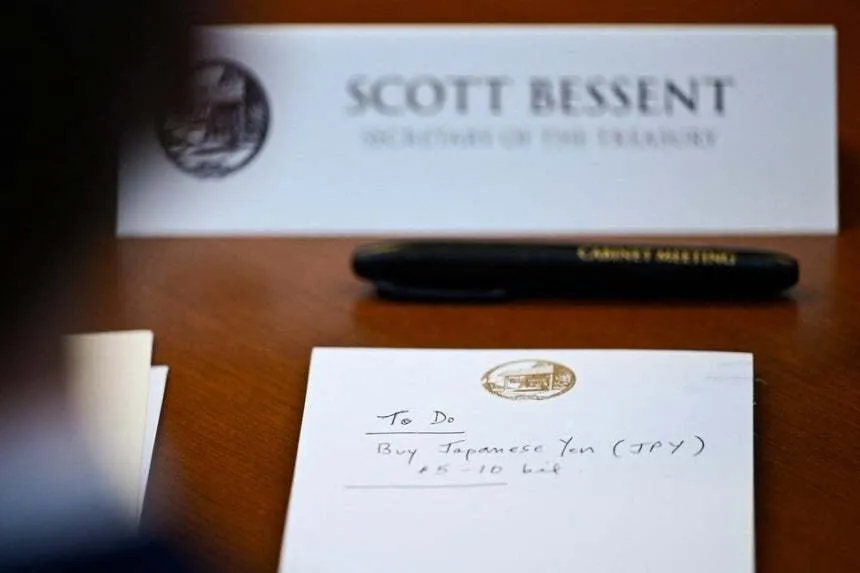
Recent coordinated efforts by the United States and Japan to support the Japanese yen have sparked discussion about the nature of their alliance. While presented as a unified front, analysis suggests that the US has distinct motivations for its involvement. These reasons are rooted in the broader economic landscape and the specific financial policies being pursued by both nations.
The US intervention in the currency markets, alongside Japan, indicates a shared concern over the yen's rapid depreciation. However, the underlying drivers for the US appear to be more complex than mere bilateral solidarity. The US administration is likely considering the ripple effects of a weakening yen on global trade dynamics and the stability of international financial systems. This coordinated action could be a strategic move to manage these global economic pressures, rather than solely an act of diplomatic goodwill towards Japan.
The coordinated intervention to support the yen highlights the intricate interplay between national economic interests and international financial stability. While presented as a partnership, the US likely has strategic imperatives related to global trade balance and the potential for currency fluctuations to impact its own economic objectives. This action underscores the tension between fostering bilateral relationships and pursuing independent national economic strategies in a globalized world. The effectiveness and long-term implications of such interventions warrant careful observation, particularly in the context of evolving global economic power dynamics and the increasing influence of digital currencies.
AI-generated to prompt reflection — not editorial opinion, not advice, not a statement of fact. How this works.
