US Justice Dept. Admits Contractor Error in Reflecting Pool Renovation, Exonerates Suspect
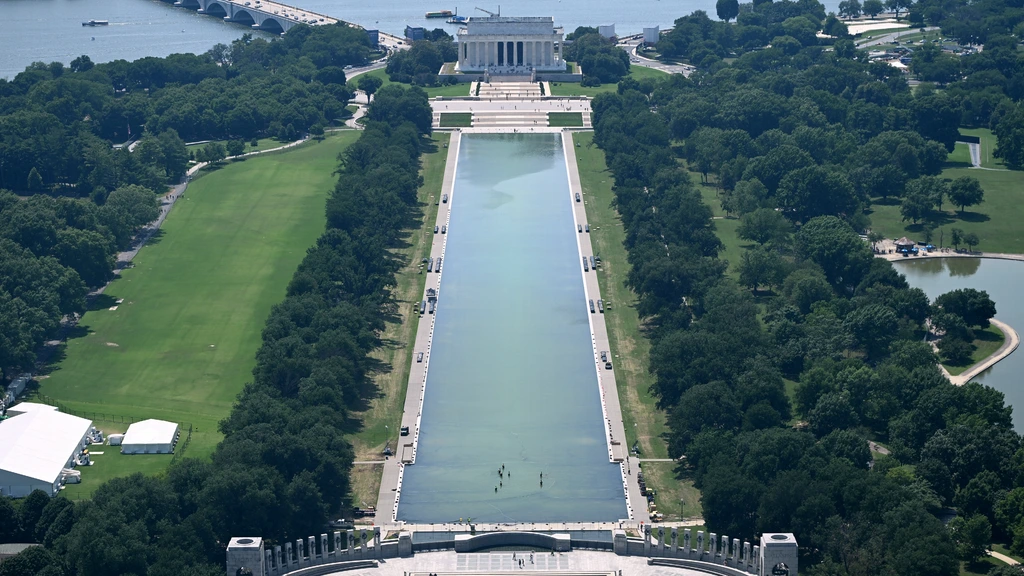
The U.S. Department of Justice has acknowledged that errors were made by the contractor during the renovation of the Reflecting Pool in Washington, D.C., and has determined that no vandalism occurred. This statement contradicts earlier accusations, notably those made by former President Donald Trump. Consequently, David Hearn, a former Olympic canoeist who had been accused of vandalism, will not face prosecution. Washington's prosecutor, Pirro, who had previously stated there was "overwhelming evidence" of Hearn committing a crime and facing a ten-year prison sentence, has now retracted her earlier claims. The renovation of the Reflecting Pool, located near the Lincoln Memorial, was a project championed by Trump, intended to celebrate the 250th anniversary of American independence. The project aimed to paint the pool's bottom in an "American flag blue" color, but this effort proved unsuccessful. The paint quickly detached, and algae bloomed, turning the water green instead of blue. Trump had alleged sabotage, leading to several arrests, including Hearn's. Hearn was accused of destroying federal property by allegedly pulling up a section of the pool's floor. Hearn maintained he had merely touched a section of the floor during a bike ride, which then detached and floated to the surface. The Justice Department stated it received documents from the Department of the Interior indicating the renovation was "hastily and poorly" executed, with significant errors made by the primary contractor in applying the blue coating. Hearn's attorneys argue that the dismissal of the case does not rectify the "abuse of governmental power" and are seeking an apology for their client.
The U.S. Department of Justice's acknowledgment of contractor error and dismissal of vandalism charges in the Reflecting Pool renovation highlights the critical importance of rigorous oversight and transparent communication in public works projects. The initial accusations, amplified by political rhetoric, underscore the potential for public discourse to diverge from factual findings, particularly when projects are linked to high-profile figures or political agendas. Moving forward, a focus on robust contractual specifications, independent quality control, and timely information sharing between government agencies and contractors could mitigate such discrepancies. This situation also prompts reflection on the accountability mechanisms for both government agencies and contractors when project execution falls short, and how to ensure due process is upheld in the face of potentially biased public narratives.
AI-generated to prompt reflection — not editorial opinion, not advice, not a statement of fact. How this works.