US Launches Airstrikes Against Iran Following Attacks in Strait of Hormuz
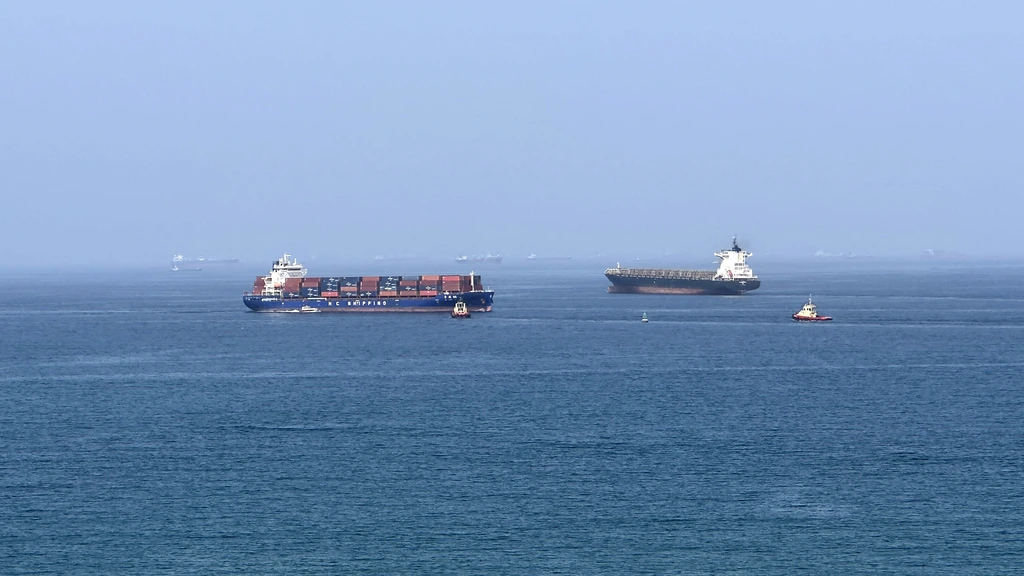
The United States has conducted airstrikes against Iran in response to recent attacks on commercial vessels in the Strait of Hormuz. The U.S. military announced it had initiated "a series of powerful strikes" targeting Iran, citing the Iranian assaults on three commercial ships. One vessel was attacked on Tuesday, while two other tankers were targeted within a 24-hour period on Monday and Tuesday, according to the BBC. State media in Iran reported hearing explosions in Sirik and Bandar Abbas, both located along the Strait of Hormuz, with multiple projectiles reportedly hitting a pier in Sirik. The U.S. Central Command characterized the Iranian attacks on the oil tankers as "unjustified, dangerous, and a clear violation of the ceasefire." This action follows a similar pattern, as the U.S. previously carried out strikes in late June in retaliation for a ship attack, with Vice President Vance stating at the time that "violence is met with violence." Concurrently, the U.S. reimposed temporary sanctions on Iran's oil industry on Tuesday. This measure was taken after a U.S. official deemed the attacks in the Strait of Hormuz "completely unacceptable" and warned of repercussions. The U.S. revoked a license that permitted the sale of Iranian oil, a decision condemned by Iran's Ministry of Foreign Affairs, which claims it violates the Islamabad memorandum on ending the war.
The U.S. military's airstrikes in response to Iranian attacks on commercial shipping in the Strait of Hormuz represent a significant escalation in regional tensions. This kinetic response, coupled with the reimposition of sanctions on Iran's oil sector, signals a firm stance by the U.S. to deter further aggression and enforce international maritime security. The U.S. action highlights the persistent vulnerability of global energy supply chains to geopolitical instability in critical choke points like the Strait of Hormuz. From a systemic perspective, this event underscores the challenge of maintaining de-escalation in environments characterized by asymmetric warfare and competing national interests. The effectiveness of such retaliatory measures in permanently altering an adversary's strategic calculus, versus potentially provoking further escalation or unintended consequences, remains a key consideration for future policy decisions.
AI-generated to prompt reflection — not editorial opinion, not advice, not a statement of fact. How this works.