US Launches New Strikes on Iran Amidst Escalating Regional Tensions
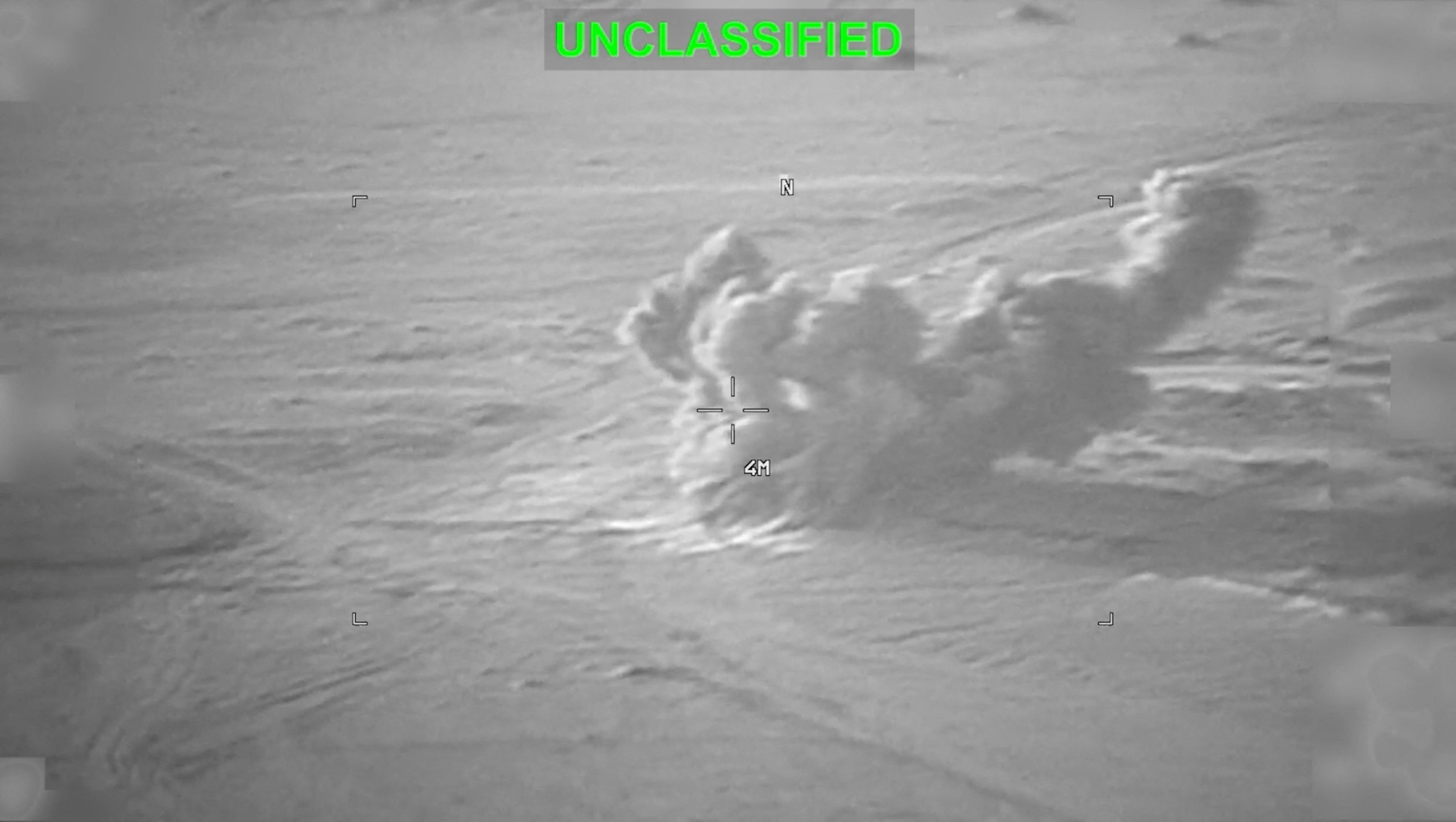
The United States Central Command (CentCom) announced new strikes against Iran on Monday, January 20th, following a renewed promise of retaliation by U.S. President Donald Trump. These actions were prompted by recent Iranian attacks that resulted in the deaths of three U.S. service members in Jordan and one missing, with approximately 430 Iranian combatants reportedly injured since the conflict's outset. CentCom stated that the strikes aim to degrade Iran's military capabilities used to threaten commercial shipping in the Strait of Hormuz. Iranian state media reported explosions in Bandar Abbas, near the Strait, and the activation of air defense systems at the Bushehr nuclear power plant. The U.S. military also claimed responsibility for a Sunday bombing of the Darkhovin nuclear facility under construction and other sites in the port city of Bushehr. Previous U.S. bombardments reportedly hit civilian infrastructure, including bridges and desalination plants. The supreme leader of Iran had previously warned that Washington would pay for escalating the conflict. The CentCom statement indicated the airstrikes began at 7 PM Brasília time, ordered by President Trump, to further reduce Iran's threat to commercial navigation and swiftly punish the Islamic Revolutionary Guard Corps for attacks on U.S. personnel in Jordan. The conflict has seen a military escalation since a ceasefire agreement between Iran and the U.S. collapsed in June, with Iran suspending its commitments. CentCom reported conducting strikes for seven consecutive nights on Iranian surveillance, military logistics, weapons depots, and maritime capabilities. Iranian state media reported U.S. bombings hit power plants and desalination facilities in Hormozgan province, with one desalination plant destroyed, impacting water supply for about 10,000 people.
The escalating military actions between the United States and Iran, particularly concerning the Strait of Hormuz and retaliatory strikes following casualties in Jordan, highlight the volatile geopolitical landscape. The stated U.S. objective of degrading Iran's capacity to threaten commercial shipping, juxtaposed with Iranian accusations of U.S. escalation and violations of agreements, points to a complex interplay of security concerns and strategic posturing. The targeting of civilian infrastructure, such as desalination plants, raises questions about proportionality and the potential for unintended humanitarian consequences, which could further destabilize regional dynamics. As these exchanges continue, the risk of a wider conflict increases, underscoring the need for de-escalation mechanisms and diplomatic engagement to prevent a broader regional conflagration, especially in the context of evolving global power structures and technological advancements in warfare.
AI-generated to prompt reflection — not editorial opinion, not advice, not a statement of fact. How this works.