US Military Conducts Seventh Consecutive Night of Strikes Against Iranian Targets
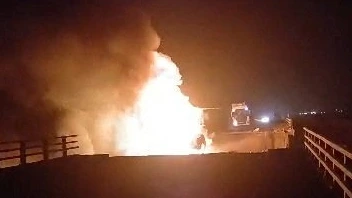
The United States military has reported conducting strikes against Iran for the seventh consecutive night, stating the objective is to "continue to degrade Iran's military capabilities." Recent strikes on Thursday night specifically targeted bridges in southern Iran and a naval base belonging to the Islamic Revolutionary Guard Corps (IRGC) near Bandar Abbas, a strategic location on the Strait of Hormuz. UN Secretary-General Guterres has deemed attacks on civilian infrastructure unacceptable, noting that Iran has also targeted such facilities, including a crucial desalination plant in Kuwait that supplies 90% of the country's drinking water. Iran claims the US is also attacking desalination plants. The IRGC has announced launching missiles towards Qatar, Bahrain, Oman, Jordan, and Syria in the past night. An intent agreement reached in June between Iran and the US aimed to cease mutual attacks and reopen the Strait of Hormuz, vital for global oil and gas transport. Further negotiations were scheduled within sixty days to pave the way for a peace accord and discussions on Iran's nuclear program. However, this ceasefire never materialized, and hostilities have recently escalated. President Trump announced the termination of the agreement last week, calling negotiations a "waste of time." The US military indicated that Thursday night's strikes hit Iranian command centers, missile and drone installations, and coastal surveillance facilities.
The escalating military actions between the US and Iran, particularly the repeated strikes on Iranian targets and Iran's retaliatory missile launches, indicate a breakdown in diplomatic efforts and a return to direct confrontation. The targeting of civilian infrastructure, such as desalination plants, by both sides raises significant humanitarian concerns and risks broader regional instability. The failure of the June intent agreement highlights the deep-seated mistrust and the challenges in de-escalating the conflict, especially given President Trump's recent withdrawal from negotiations. Looking ahead, the continued militarization of the Strait of Hormuz and surrounding areas poses a persistent threat to global energy markets and international maritime security. The underlying geopolitical tensions and Iran's nuclear program remain critical factors that will likely shape future interactions and the potential for a lasting resolution.
AI-generated to prompt reflection — not editorial opinion, not advice, not a statement of fact. How this works.