US Military Stretched Thin, May Struggle to Defend Israel and Own Interests
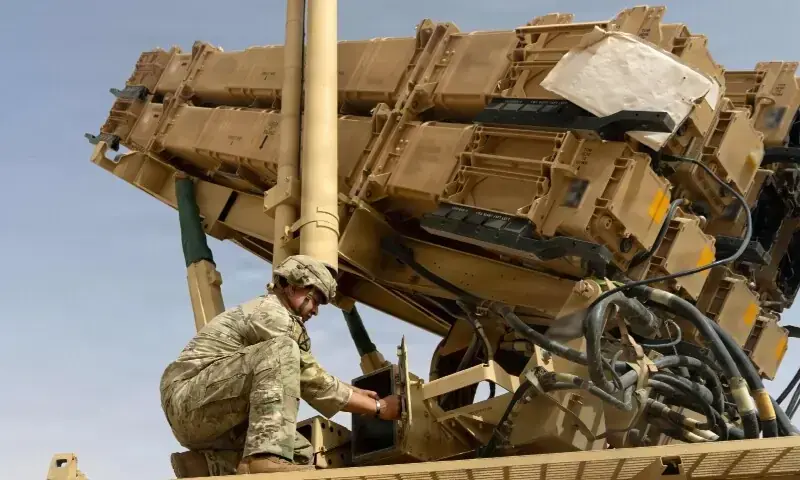
A top US commander has warned that the American military may no longer possess sufficient naval forces to simultaneously defend Israel against Iranian missile attacks and protect US interests across the Middle East. General Alexus Grynkewich, commander of US European Command, has reportedly informed Pentagon officials that US naval assets are overextended due to the ongoing conflict with Iran. Without an additional US Navy destroyer in the region, commanders might be forced to prioritize protecting American forces over continuing missile defense operations for Israel. This warning highlights a critical internal military concern that global commitments are outstripping available resources. Navy destroyers equipped with the Aegis system are crucial for Israel's missile defense, but they are also vital for deterring China in the Pacific, reassuring NATO allies in Europe, and safeguarding US bases and shipping routes in the Middle East. The deployment of these ships to defend Israel means they are unavailable for other potential crises. Recent assessments indicate US forces expended over 200 THAAD interceptors, approximately half of the Pentagon's inventory, and more than 100 interceptors from Navy ships during the conflict with Iran. While Israel utilized its own defense systems, it heavily relied on American support. The issue is compounded by the slow replacement rate of advanced interceptors, which take years to manufacture. Prolonged combat could strain US stockpiles of critical air-defense weapons. This situation challenges the long-standing assumption in American military strategy that Washington can manage multiple simultaneous crises. The US military's vast power is not unlimited, and modern warfare is depleting advanced weapons faster than they can be replenished, forcing difficult choices when multiple crises demand the same resources.
This situation reveals a critical tension between the United States' global security commitments and its finite military resources. The extensive use of advanced interceptors and the strain on naval assets suggest that the current geopolitical landscape, characterized by multiple potential flashpoints, is testing the limits of even the most powerful military. The challenge for Pentagon planners is not a lack of strength, but the industrial and logistical capacity to sustain simultaneous, high-intensity operations across diverse theaters. This scenario prompts consideration of strategic trade-offs: how to balance immediate crisis response with long-term deterrence, and whether current force structures and production capabilities are adequate for a future defined by persistent, multi-front challenges. The event underscores the need for ongoing re-evaluation of defense resource allocation and industrial base readiness in an era of escalating global competition.
AI-generated to prompt reflection — not editorial opinion, not advice, not a statement of fact. How this works.