US naval blockade of Iran begins; Trump claims toll on Hormuz cargo
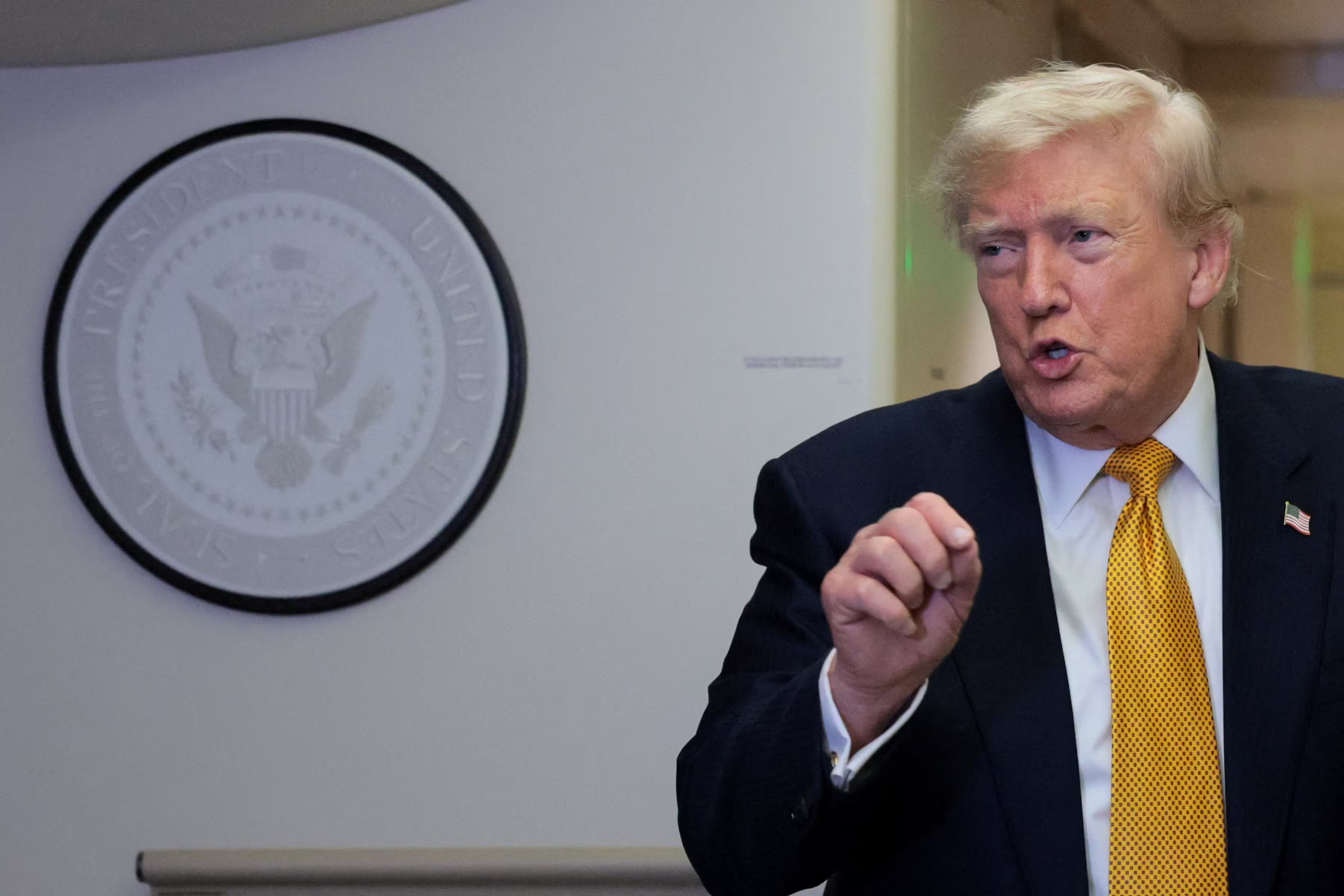
The United States commenced a naval blockade on Tuesday, July 14th, at 5 PM Brasília time, aimed at restricting maritime traffic linked to Iran. This action follows President Donald Trump's assertion that the U.S. will act as the "guardian" of the Strait of Hormuz and intends to levy a 20% "toll" on all cargo passing through the vital waterway. The U.S. Navy stated the blockade will extend along the entire Iranian coast, targeting vessels departing from any port or oil terminal within the country. While "neutral transit" and humanitarian aid shipments will be permitted, all vessels will undergo military inspection. This move appears to supersede a prior peace agreement between the U.S. and Iran, which had stipulated the reopening of the Strait for 60 days without tolls, allowing for negotiations on future administration. Trump declared on Truth Social that the U.S. will be "reimbursed" for ensuring the region's security, a stance that contrasts with his earlier statements in June. Iran's military command has vehemently rejected the U.S. intervention, warning that any attempt to transit the Strait without Iranian authorization will be met with strong resistance and that cooperation with the U.S. by regional neighbors will be considered an act of war. The Iranian Revolutionary Guard Corps asserted its continued authority over the Strait, accusing the U.S. of jeopardizing global oil and gas supply security. Iran claimed to have closed the Strait on Saturday, July 11th, a statement denied by U.S. officials, following a period of escalating tensions and U.S. strikes on Iranian military targets.
The U.S. declaration of a naval blockade and proposed toll on maritime traffic through the Strait of Hormuz represents a significant escalation in regional geopolitical strategy. By positioning the U.S. as a "guardian" and seeking financial reimbursement, the administration signals a shift towards a transactional approach to international security, potentially altering established norms of freedom of navigation. This move could create complex legal and diplomatic challenges, particularly concerning international maritime law and the sovereignty claims of littoral states. The stated objective of strangling Iran's economy through naval interdiction, while framed as a response to prior Iranian actions, carries inherent risks of further destabilizing a critical global energy chokepoint. Future developments will likely hinge on the degree of international cooperation or opposition, the effectiveness of Iran's counter-measures, and the long-term implications for global trade and energy security in an increasingly interconnected world.
AI-generated to prompt reflection — not editorial opinion, not advice, not a statement of fact. How this works.