US Navy Disrupts Iranian Radar to Secure Strait of Hormuz Shipping
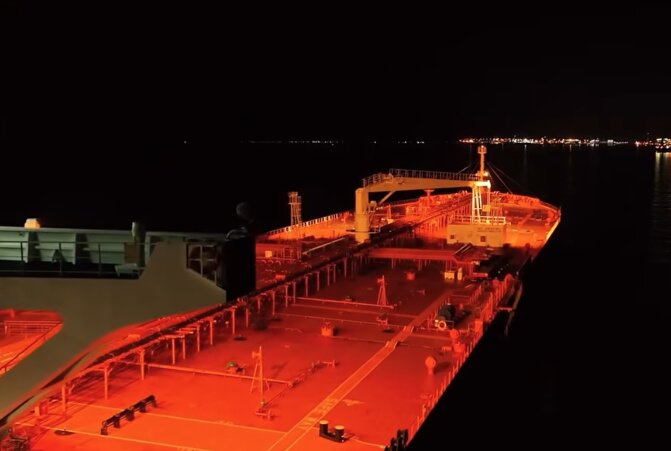
The United States Navy has reportedly disrupted Iran's military radar capabilities, specifically targeting its ability to detect and target ships, in order to ensure safe passage through the Strait of Hormuz. This action was taken to counter Iran's potential to control or blockade the vital waterway. The U.S. Navy employed methods to blind Iran's military systems, rather than asserting direct control over the strait itself. A video documentation reportedly shows a high-risk transit of a large, 1,000-foot supertanker navigating through the strait under these conditions. This operation aims to maintain freedom of navigation for commercial vessels, particularly large oil tankers, which are crucial for global energy supply chains. The strategy focuses on degrading Iran's surveillance and targeting capacity, thereby mitigating threats to international shipping in a strategically critical chokepoint.
This U.S. Navy operation highlights a strategic approach to maintaining maritime security by degrading an adversary's sensor and targeting capabilities rather than through direct kinetic engagement or territorial control. Such non-kinetic means of asserting influence can offer a lower-risk profile for de-escalation while still achieving critical objectives. The effectiveness of this strategy hinges on the longevity and sophistication of the jamming or disabling technology employed, and Iran's capacity to adapt or counter these measures. Looking ahead, the increasing reliance on electronic warfare and cyber capabilities in military operations suggests a future where control of the electromagnetic spectrum and digital infrastructure will be paramount for strategic advantage, potentially leading to an escalating technological arms race in sensitive regions.
AI-generated to prompt reflection — not editorial opinion, not advice, not a statement of fact. How this works.