US Navy to Blockade Strait of Hormuz Starting Tuesday, Citing Security Concerns
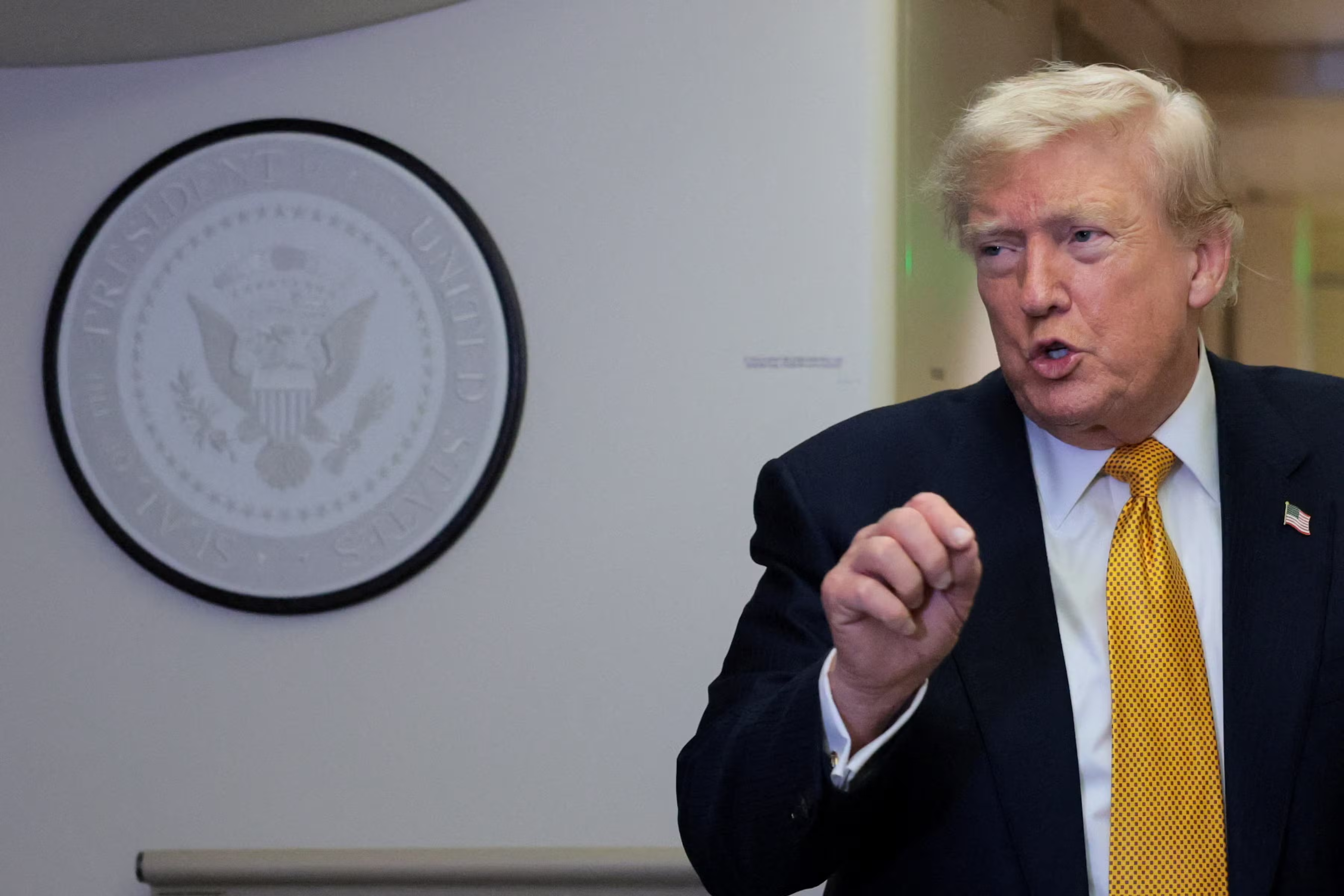
The U.S. Navy announced it will re-impose a blockade on the Strait of Hormuz starting Tuesday evening, May 14th. This action follows President Donald Trump's declaration that the U.S. intends to control the vital waterway and be compensated for securing it. The blockade will extend along Iran's entire coast, aiming to restrict traffic from Iranian oil ports and terminals. Neutral transit and ships carrying humanitarian supplies will be permitted, but all vessels will undergo inspections. This move appears to deviate from a prior peace agreement between the U.S. and Iran, which had stipulated the reopening of the strait without tolls for 60 days, allowing for negotiations on its future administration. Trump stated the U.S. will act as the "guardian" of the strait and expects reimbursement, contradicting earlier statements about free passage. Iran's military command has strongly refuted the U.S. intentions, asserting that any U.S. transit without Iranian authorization will be met with resistance and warning regional countries against cooperation with the U.S. The Iranian Revolutionary Guard Corps affirmed its control over the strait and threatened global oil and gas supply security. Iran claims the strait was closed on Saturday, May 11th, a claim denied by the U.S., amidst ongoing retaliatory attacks between the two nations over maritime incidents. The U.S. stated its recent strikes targeted Iranian military sites in retaliation for attacks on vessels, while Iran confirmed detaining a vessel for violating unauthorized routes. Iran's Parliament speaker criticized the U.S. actions, suggesting a shift away from unilateral agreements.
The U.S. declaration of a blockade on the Strait of Hormuz and President Trump's assertion of guardianship, coupled with a demand for reimbursement, signals a significant escalation in regional tensions. This policy shift may be driven by a desire to exert leverage over Iran and secure energy transit routes, potentially impacting global oil prices and supply chains. The U.S. action, framed as a security measure, could be interpreted by regional actors as an attempt to unilaterally control a critical international chokepoint. Iran's strong phản ứng suggests a potential for further military confrontation, with implications for the broader geopolitical landscape. The long-term viability of such a strategy, especially in the context of evolving global energy markets and international maritime law, warrants careful consideration of potential unintended consequences and the risk of wider conflict.
AI-generated to prompt reflection — not editorial opinion, not advice, not a statement of fact. How this works.