US President Trump: Venezuela Not Ready for New Elections Amidst Earthquake Aftermath
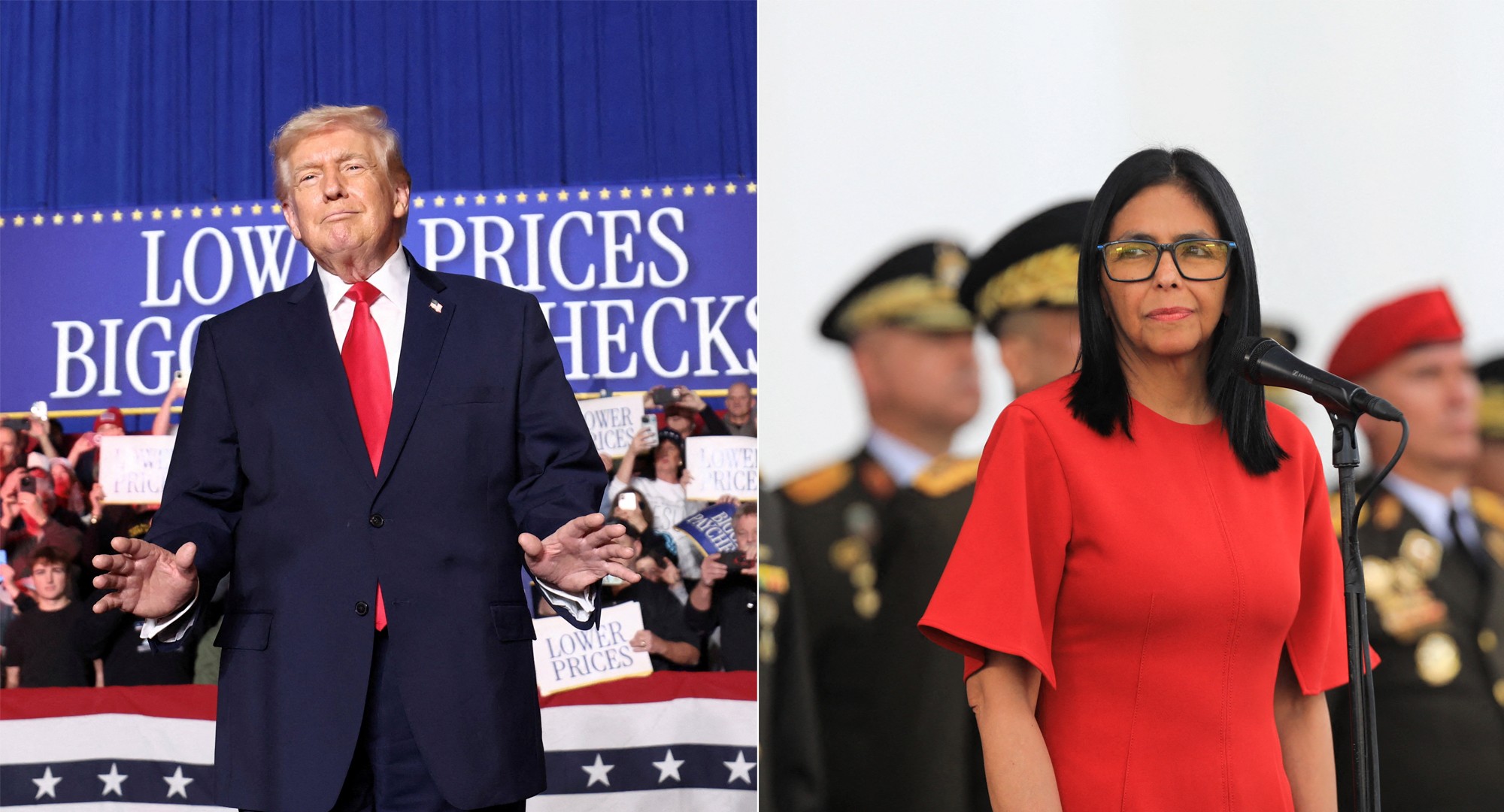
United States President Donald Trump stated on Friday, March 24, that Venezuela is not yet prepared for new presidential elections. This declaration coincides with the one-month anniversary of a devastating earthquake that struck the country, resulting in at least 5,000 fatalities. The earthquake, caused by two tremors of magnitudes 7.2 and 7.5 on June 24, was the deadliest in Venezuela since 1812 and the most severe natural disaster in its recent history. In early January, a U.S. military operation in Caracas led to the arrest of former Venezuelan President Nicolás Maduro and his wife, Cilia Flores. They are currently detained in New York, facing charges including narco-terrorism and drug trafficking, with their trial scheduled for June 1, 2027. Following Maduro's capture, Vice President Delcy Rodríguez assumed the role of interim president, supported by her brother and National Assembly President, Jorge Rodríguez, who is leading political negotiations. Representatives from Venezuela's ruling party and the opposition recently met for the first time since agreeing to hold presidential elections in 2024. Trump indicated that Rodríguez has been cooperative with U.S. interests, acknowledging significant progress under her interim leadership, despite ruling out an imminent election. The U.S. has previously shown support for Rodríguez's interim government, even preventing opposition leader María Corina Machado from returning to Venezuela, deeming her presence counterproductive to post-disaster aid efforts. Machado, who had previously fled Venezuela with U.S. assistance, was denied passage to Curaçao, from where she intended to travel back to her country by sea. Rescue efforts and family members continue to search for victims among the earthquake debris, with hundreds still missing and an estimated reconstruction cost in the billions. Official reports indicate over 5,000 deaths and approximately 17,000 injuries, though the government acknowledges the final death toll could exceed 10,000. Hundreds of buildings collapsed or sustained structural damage, leaving at least 20,000 people in temporary shelters, while nearly 30,000 individuals remain unaccounted for according to public platforms.
The U.S. President's assertion regarding Venezuela's electoral readiness, made during a period of profound national crisis following a major earthquake, suggests a strategic alignment between U.S. foreign policy objectives and Venezuela's internal political dynamics. The U.S. government's actions, including the detention of former leadership and the apparent support for the interim government led by Delcy Rodríguez, indicate a preference for a controlled political transition that aligns with U.S. interests. The decision to impede opposition leader María Corina Machado's return, framed as a measure to avoid complicating aid efforts, also highlights the complex interplay of humanitarian concerns and geopolitical maneuvering. This situation raises questions about the extent to which external actors should influence a nation's internal political processes, particularly during humanitarian emergencies. The long-term implications for Venezuelan sovereignty and democratic development, as well as regional stability, warrant careful consideration as the country navigates both its recovery from the natural disaster and its path toward future governance.
AI-generated to prompt reflection — not editorial opinion, not advice, not a statement of fact. How this works.