US proposes removing steering wheels, EU mandates driver-facing cameras
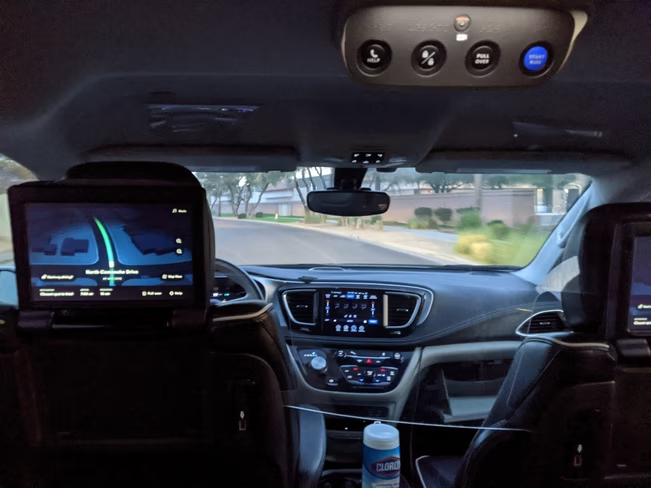
Regulators in the United States and the European Union have taken divergent approaches to vehicle safety and driver monitoring. In the U.S., the top auto-safety official suggested the possibility of removing steering wheels entirely from vehicles. This proposal hints at a future where autonomous driving technology might render traditional steering controls obsolete. Conversely, the EU has implemented new regulations that require cameras to be positioned to monitor drivers' faces. These rules are designed to ensure drivers remain attentive and engaged, particularly in vehicles with advanced driver-assistance systems. The differing viewpoints highlight the contrasting philosophies on how to ensure safety and manage the integration of new technologies in the automotive sector. While the U.S. appears to be leaning towards a future of full autonomy, the EU is focusing on maintaining driver accountability and oversight.
The contrasting regulatory approaches by the US and EU reflect differing strategic priorities in the automotive sector's evolution. The US proposal to eliminate steering wheels signals a strong commitment to advancing fully autonomous driving capabilities, potentially prioritizing technological progress and passenger convenience. The EU's mandate for driver-facing cameras, however, emphasizes a more cautious integration, focusing on driver oversight and accountability within evolving driver-assistance systems. This divergence may create distinct market segments and technological pathways, influencing global automotive standards and innovation trajectories over the next decade. It raises questions about the pace of autonomous adoption, the balance between human control and machine autonomy, and the ethical considerations of constant driver monitoring.
AI-generated to prompt reflection — not editorial opinion, not advice, not a statement of fact. How this works.