US Ready to Act if Houthis Block Red Sea, Says Trump
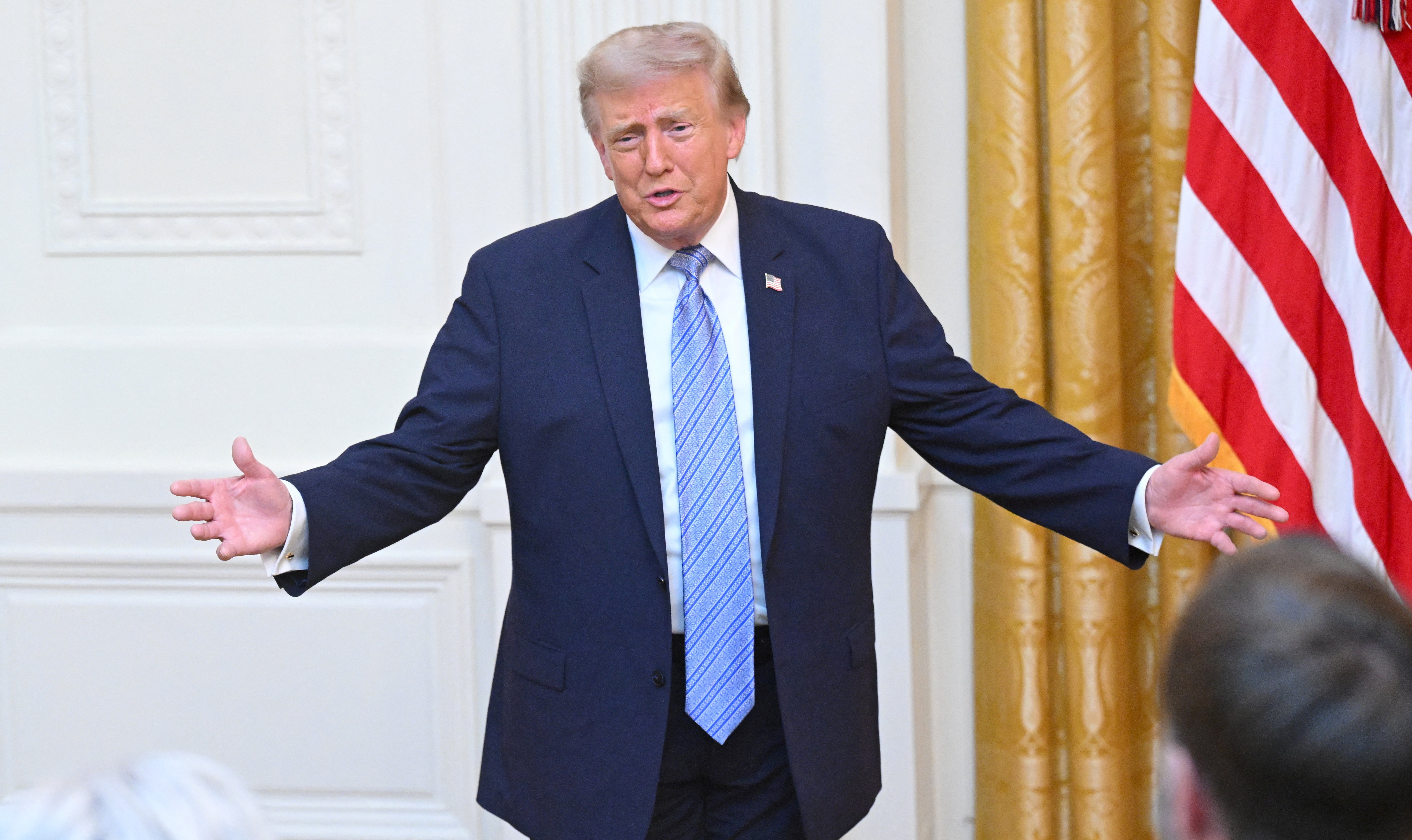
President Donald Trump stated on Tuesday, February 21st, that the United States is prepared to respond if the Houthi movement carries out its threat to blockade commercial shipping in the Red Sea. Trump indicated that if the group proceeds with this plan, the U.S. "will simply have to take care of the matter." The Houthis, an extremist group from northern Yemen founded in the 1990s, have controlled the capital Sanaa since 2014 and are supported by Iran, though Tehran denies direct control. Since the Israel-Hamas war began in 2023, the Houthis have increased attacks on ships in the Red Sea and launched missiles and drones at Israel, citing support for Palestinians. The group recently announced a maritime embargo against Saudi Arabia and has threatened to close the Bab el-Mandeb Strait, a critical oil export route. This strait, connecting the Red Sea to the Indian Ocean between Yemen and the Horn of Africa, handles approximately 7% of oil and goods transported between Asia and Europe en route to the Suez Canal. The U.S. president made these remarks during a press conference at the White House. Trump also announced that the U.S. would "very soon" attack the Pickaxe Mountain area near Iran's Natanz uranium enrichment facility, a highly fortified complex associated with Iran's nuclear program.
The U.S. response to potential Houthi actions in the Red Sea highlights the complex geopolitical dynamics and the strategic importance of global trade routes. The threat of a Red Sea blockade by the Houthis, a group with Iranian backing, underscores the potential for regional conflicts to disrupt international commerce and energy supplies. The U.S. administration's stated readiness to intervene reflects a policy of maintaining freedom of navigation and deterring actions that could significantly impact global markets. This situation also brings into focus the broader tensions between the U.S. and Iran, particularly concerning Iran's nuclear program and its influence in regional conflicts. The U.S. administration's dual approach—addressing immediate threats to shipping while also signaling actions against Iran's nuclear infrastructure—suggests a strategy aimed at both de-escalation and deterrence in a volatile region. The effectiveness of these measures will depend on the credibility of U.S. resolve and the broader regional balance of power.
AI-generated to prompt reflection — not editorial opinion, not advice, not a statement of fact. How this works.