US Residents Push Back Against Rapid Data Center Expansion
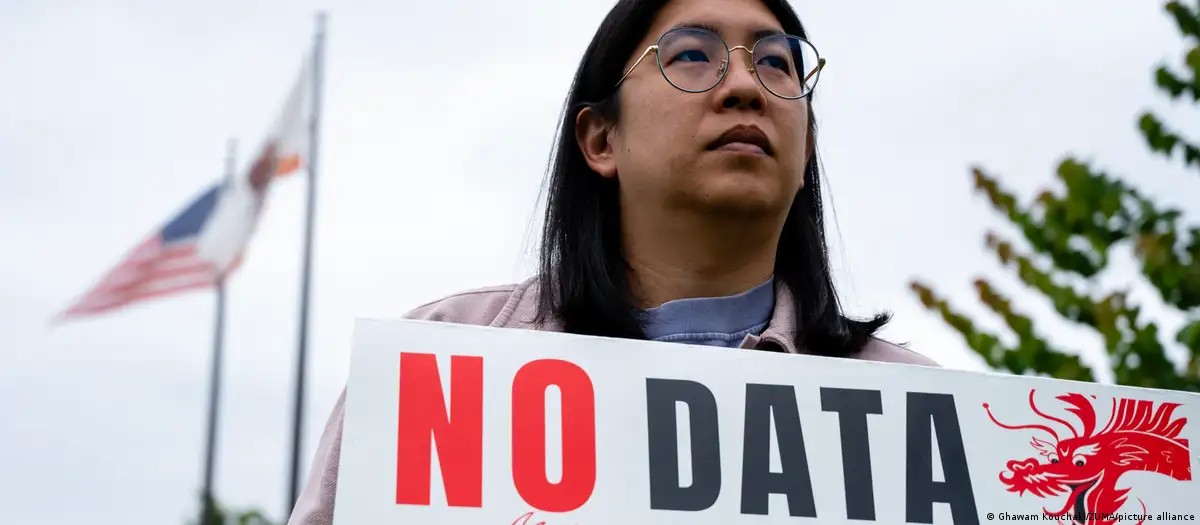
Across the United States, citizens are voicing strong opposition to the rapid and often unchecked expansion of data centers. In Frederick County, Maryland, local activist Elizabeth Bauer became a leading voice against a large Amazon data center project that expanded significantly beyond its original plans, encroaching on green spaces and farmland. Bauer and other residents are concerned about dust and pollution from construction, which they argue exacerbates health issues like asthma. She stated that while she doesn't oppose data centers themselves, she objects to their placement on prime agricultural land.
These protests are part of a growing national movement demanding action from politicians. The Mid-Atlantic region, particularly Maryland, Virginia, and Washington D.C., is a focal point, with Virginia alone hosting around 640 data centers. The concerns extend beyond construction, addressing the substantial long-term impacts of these facilities. Data centers consume vast amounts of energy, equivalent to 100,000 homes, and new constructions could demand twenty times more, driven by the increasing needs of artificial intelligence. Goldman Sachs projects data centers' share of U.S. energy consumption to rise from 4.4% to 8.5% by 2027.
The U.S. has approximately 4,600 data centers, more than the next ten countries combined, and nearly 40% of Americans live within five miles of one. With over 1,500 more under construction, this proximity is set to increase. A recent Gallup poll found 71% of Americans oppose data centers in their communities. These facilities can also consume up to 5 million gallons of water daily, often in water-scarce regions like Frederick County. Experts like Francesca Dominici from Harvard's School of Public Health criticize tech companies for disregarding water issues and prioritizing low-cost land and quick political approvals. Additionally, electricity prices in areas with high data center concentration have surged, with costs for new transmission lines being passed to consumers, and concerns exist about grid overload potentially requiring diesel generators. These generators pose health risks, including increased chances of birth defects, respiratory and cardiovascular diseases, and premature deaths, while also threatening local wildlife and plant growth.
Regulation of data centers is largely a municipal matter, with many states offering a permissive regulatory environment. Some local administrations have not established land-use rules, allowing developers significant leeway. Former President Donald Trump's administration also reduced regulatory hurdles for data center creation as part of an initiative to boost AI leadership. Tech companies often use non-disclosure agreements with local authorities, limiting transparency and community understanding of project impacts. While companies claim economic benefits, a University of Michigan study found data centers create temporary construction jobs but few long-term tech roles. However, some companies are shifting towards greater transparency; Microsoft has ceased using NDAs for data center development, and Meta is exploring low-carbon concrete. Experts suggest a future where technological advancement and community benefit coexist, advocating for impartial scientific assessments to minimize impact.
The proliferation of data centers in the U.S. presents a complex interplay of technological advancement, economic incentives, and environmental and community impacts. While these facilities are crucial for supporting the digital economy and the burgeoning demands of AI, their rapid, often uncoordinated, expansion raises significant concerns regarding resource consumption, particularly energy and water, and local environmental quality. The analysis highlights a systemic tension: the drive for rapid development, often facilitated by favorable regulatory environments and corporate influence on policy, frequently overlooks the cumulative externalities borne by local communities and ecosystems. This dynamic suggests a need for more robust, forward-looking governance frameworks that proactively balance the benefits of digital infrastructure with the imperative of sustainable development and public health, particularly in the context of increasing climate-related resource scarcity and the growing energy demands of AI.
AI-generated to prompt reflection — not editorial opinion, not advice, not a statement of fact. How this works.